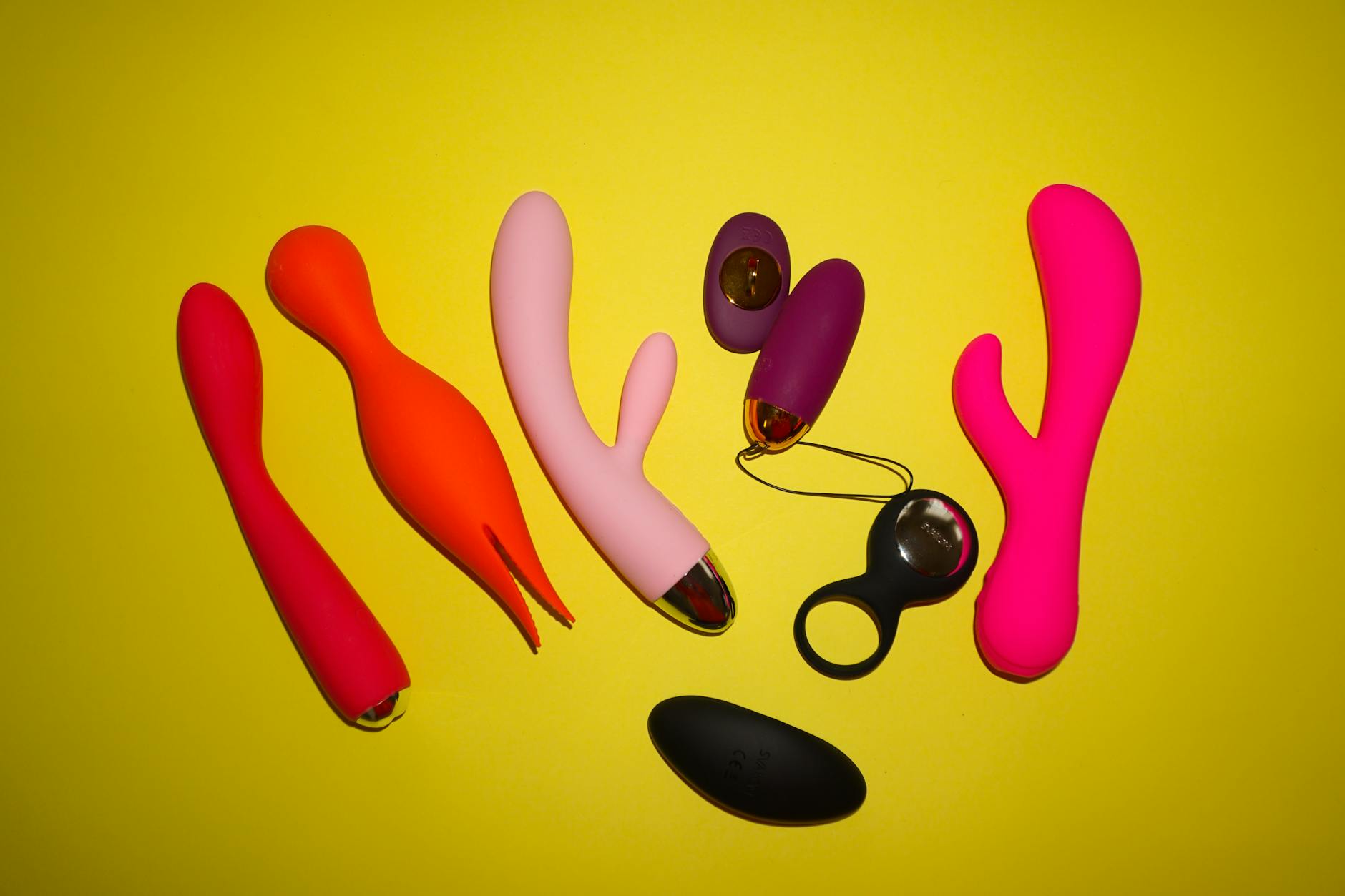
Let's be honest about antidepressants and arousal
Starting antidepressants saves lives. Full stop. But here's what nobody warned me about when I started my first SSRI at twenty-eight: the orgasm flatline. The weirdness where your body feels present but something underneath isn't firing. The frustration of wanting to want sex but feeling stuck behind a pane of glass.
This is not in your head. This is not a sign the medication is wrong. And most importantly, this is not permanent. But the months between "I can't feel anything" and "oh, that's coming back" are real, and knowing how to navigate them matters.
I've worked with dozens of people navigating the sexual side effects of antidepressants, and what I've learned is this: a lemon clitoral vibrator can be a bridge back to pleasure when everything feels muted.
Why antidepressants affect arousal in the first place
SSRIs (like sertraline, paroxetine, fluoxetine) work by increasing serotonin availability in the brain. That's the good part. But serotonin also regulates dopamine and norepinephrine, which drive desire and physical arousal. When the chemistry shifts, so does responsiveness.
You might notice: decreased libido, difficulty achieving arousal, delayed or absent orgasm, or that weird sensation where the orgasm happens but feels distant or muted. Some people describe it as watching pleasure happen rather than feeling it.
The timeline varies wildly. Some people adjust in weeks. Others take months. There's no universal answer, which is infuriating but true.
Here's what helps: understanding that your capacity for pleasure hasn't disappeared. The signal is just quieter. A lemon vibrator amplifies that signal in a way that bypasses the waiting game.
Why lemon vibrators work differently when you're on antidepressants
A traditional vibrator might feel muted when your arousal is already muted. The stimulus doesn't land as intensely. You're already struggling to feel; adding a tool that requires you to sense subtle vibration can feel pointless.
Lemon clitoral vibrators work differently. The pulsing suction mechanism creates direct pressure and release against sensitive tissue in a pattern that doesn't require fine-tuned arousal to register. You feel it immediately. It's not subtle. It's not waiting for your brain to cooperate.
Many people on SSRIs report that while orgasm might feel distant, the sensation itself is undeniable. That's because suction stimulation activates different neural pathways than vibration alone. It's less about arousal and more about physical response.
Translated: when your arousal dial is turned down, a lemon vibrator bypasses the need for that dial to be fully engaged.
How to actually use a lemon vibrator during the adjustment phase
Start with zero pressure about outcomes. Throw the "I should orgasm" narrative in the trash.
Instead, use your lemon clitoral vibrator for sensation exploration. This is not foreplay with a destination. This is you relearning what your body feels like when it's stimulated.
Set aside 20 minutes with no audience and no expectations. Use lube. Start on the lowest setting. The point is to notice. Does this feel different than before medication? Yes. Is it still a sensation you can work with? Usually, yes.
The goal here is not orgasm. It's reconnection. You're rebuilding the circuit between stimulus and sensation, proving to yourself that pleasure isn't broken, just recalibrated.
Many people find that after a few weeks of regular sensation work, the numbness begins to crack. Not because the vibrator fixed anything, but because you've given your brain and body a consistent signal: "We're still here. We're still exploring." That consistency matters.
The mental game is harder than the physical one
Here's what I see happen most often: someone starts antidepressants, notices the sexual side effects, and decides they're broken. They stop trying. They feel bad about not feeling good. Then the shame compounds everything.
The lemon vibrator is partly a tool. It's also partly permission. Permission to keep your pleasure life alive, even when the wiring is in flux. Permission to spend twenty minutes with your own body without a pass-fail grade attached.
If you have a partner, talk about this explicitly. "My arousal is slower right now due to medication. I want to explore solo and see what I can feel." Most partners understand medication side effects in a way they might not understand a sudden drop in interest if you don't name it.
Talk to your prescriber too. Sometimes switching medications, adjusting timing, or adding something like bupropion can offset sexual side effects. But that conversation only happens if you mention it.
Practical adjustments that complement your lemon vibrator
Three things that genuinely help during adjustment:
Timing matters. Most SSRIs peak in your bloodstream a few hours after you take them. Some people find that their arousal is better 12+ hours later. Experiment with when in your day you might have more sensation. There's no shame in scheduling pleasure around your medication schedule.
Lube is not optional. Everything feels more muted when there's friction. Water-based lube (not silicone, which can damage silicone toys) makes every sensation sharper. This is especially true when your body's natural lubrication might also be affected by medication.
Warm up longer. Give yourself more time before you use the vibrator. A long shower, some time thinking about something arousing (even if arousal doesn't come easily), anything that pulls blood into the area. You're not waiting for traditional arousal. You're creating conditions where sensation is more accessible.
When to consider talking to your doctor
Three to four months into a new antidepressant, your body should be settling. If sexual side effects are still severe and affecting your quality of life, that's a legitimate medical conversation.
Your doctor can suggest:
- Timing adjustments (taking the medication at night so it's less active during the day)
- Adding a second medication like bupropion or buspirone
- Switching to a different SSRI (everyone responds differently)
- Lifestyle tweaks (certain SSRIs work better with consistent exercise, adequate sleep, etc.)
You don't have to choose between mental health and sexual pleasure. If medication is helping your depression, that matters. But there are often adjustments available that let you have both.
The timeline nobody talks about
Most sexual side effects improve within three to six months as your body adjusts and as you and your medication find equilibrium. Some take longer. A few people need to switch medications. But "my sexuality never comes back" is rare, and it's usually fixable.
In the meantime, a lemon vibrator isn't a workaround for broken sexual response. It's a tool that helps you maintain contact with pleasure during a temporarily muted phase. That matters because you're not just waiting passively for your body to cooperate. You're actively rebuilding the habit, the neural pathway, the permission structure around pleasure.
When your arousal returns, which it usually does, you'll have spent those months remembering that pleasure is still available to you. That's not nothing.
FAQs: antidepressants, sexual side effects, and lemon vibrators
Can a lemon clitoral vibrator actually help with SSRI-related anorgasmia?
The mechanism isn't magical. What lemon vibrators do is provide direct, intense stimulation through suction that can bypass some of the arousal dampening caused by SSRIs. Because they don't rely on you being naturally aroused to register sensation, they can help you feel something when traditional arousal is muted. Regular use can also help train your nervous system to recognize pleasure again. That said, if anorgasmia is severe, talk to your doctor. Sometimes a medication adjustment is the real answer.
How long does it take for sexual side effects to improve?
Three to six months is the typical window for noticeable improvement, but individual variation is huge. Some people notice change within weeks. Others take longer. Your prescriber should have given you a timeline expectation when you started. If sexual side effects are extreme and not improving after six months, that's worth revisiting with your doctor.
Is it weird to use a vibrator solo while in a relationship?
Not at all. This is different from partnered sex. You're doing solo sensation work. Many therapists actually recommend this during medication adjustment because it removes performance pressure and lets you focus on what you can feel. If you're worried about your partner, tell them. "I'm exploring what my body feels like right now because the medication has changed things." Most partners get it.
Does the lemon vibrator work better than regular vibrators for antidepressant users?
For many people, yes. The suction mechanism creates a stronger, more distinctive sensation than vibration alone, which can cut through numbness more effectively. But individual preference matters. Some people prefer the regularity of vibration. If you want to test whether a lemon vibrator is right for you, our buying guide can help you understand which tools match your body's response patterns.
What if I want to be intimate with my partner while my arousal is muted?
Talk first. Tell your partner that your arousal is slower due to medication but that you still want connection. Many couples find that slowing down helps. More foreplay, lower expectations about orgasm, more focus on sensation than performance. Some people use a lemon vibrator during partnered sex, which can help bridge the arousal gap and make the experience feel less clinical. See our piece on using a lemon vibrator with your partner for specific strategies.
When should I contact my doctor about sexual side effects?
Immediately if side effects feel unbearable. Give yourself three months if they're manageable. By six months, if things haven't improved significantly, that's a worthwhile conversation. Sexual health is part of overall health. Your prescriber needs to know if medication is affecting this area of your life.
Final thought
Antidepressants didn't steal your sexuality. They changed the circuit temporarily. A lemon vibrator is one way to keep that circuit engaged while your body adjusts. But more than the tool, what matters is the permission you give yourself to keep exploring, to stay curious about pleasure even when it's muted, and to know that this phase is finite.
Your capacity for pleasure is still there. Sometimes you just need the right tool and a little patience to find it again. If you're not sure where to start with a clitoral vibrator, we've got resources that can help. Reach out to our team at /contact with questions, or browse our full collection to find what might work for your body right now.