Let's be honest about life-killing desire
Sex drive doesn't vanish because something is wrong with you. It vanishes because your nervous system is protecting you. A new job, a move, a loss, a relationship rupture—these aren't small things. Your brain registers them as threat. When threat is present, arousal gets deprioritized. Evolution didn't build us to get turned on while stressed.
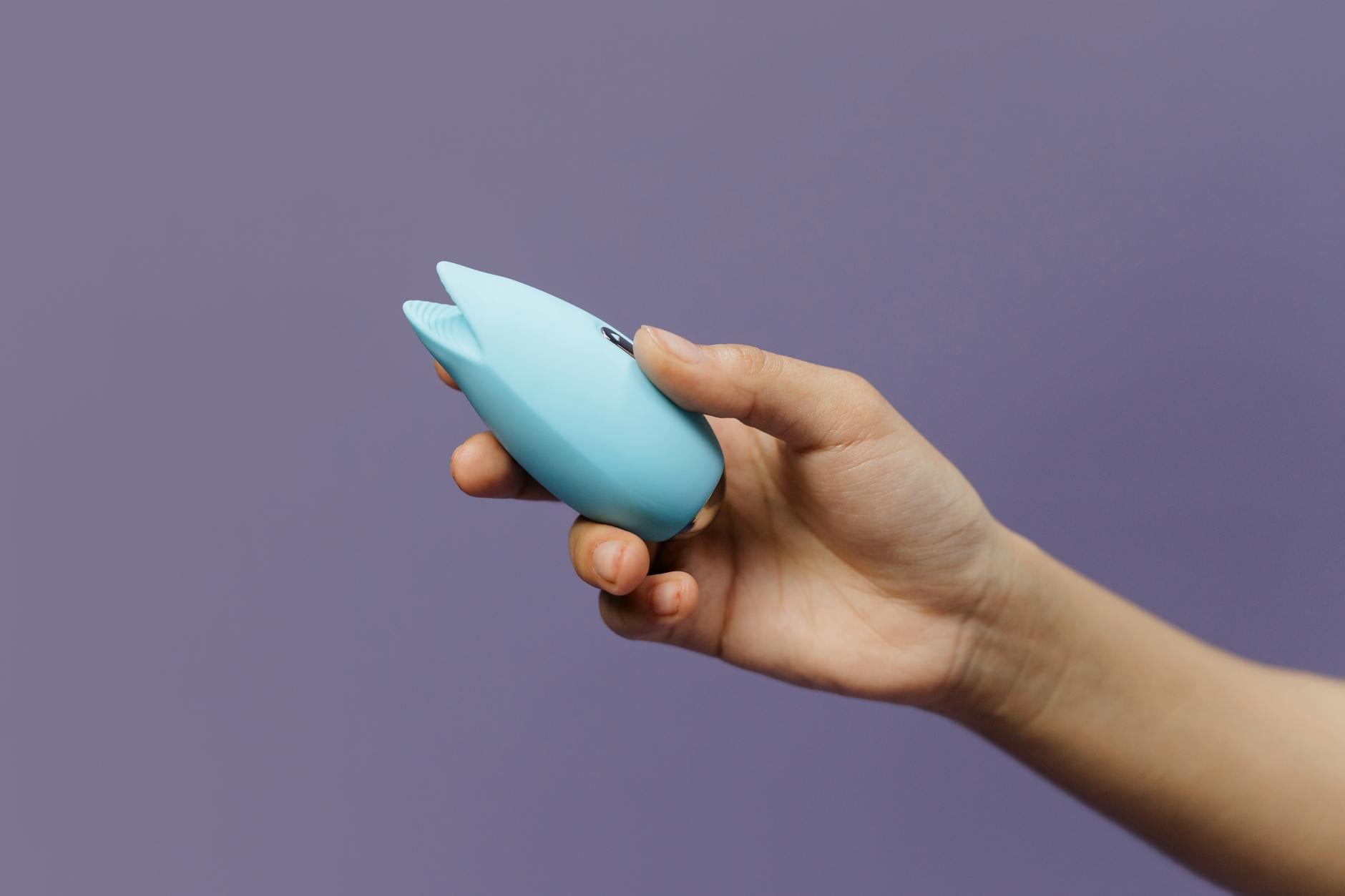
The problem isn't that your desire is gone. The problem is that most of us wait for desire to return on its own, which means waiting indefinitely. Here's what actually works: using a lemon vibrator as a bridge back to your body when your brain won't get out of the way.
Why libido tanks during major life shifts
Three things happen in parallel when your life gets unstable.
Your cortisol stays elevated. Stress hormone doesn't flip off when you clock out. It stays in your bloodstream, suppressing dopamine and the cascade of neurochemicals that build arousal. You could technically be attracted to your partner and still feel completely flat.
Your attention is fractured. Arousal requires a certain kind of focus. You need to notice sensation, anticipate pleasure, stay in your body. When your brain is holding a job search, a grief-shock, or the logistics of a move, there's no bandwidth left. You're not avoiding sex. You're genuinely too distracted to feel it.
Your body feels unsafe. Major transitions don't just stress your mind. They destabilize your nervous system. A somatic therapist would call this dysregulation. What it feels like is disconnection. You might feel numb, restless, or jittery. Desire requires a baseline of feeling safe and present in your body. Hard to access that when you're running on fight-or-flight.
The good news: this is temporary and fixable.
How a lemon vibrator bridges the gap
A clitoral vibrator like the Lem works differently than partnered sex during this phase. It's not about performance, reciprocation, or being ready. It's about rewiring your nervous system back to pleasure without the cognitive load.
Here's what happens physiologically. Suction-based stimulation (the way lemon adult toys work) triggers a specific neural pathway independent of arousal. You don't need to feel turned on first. The sensation itself creates a feedback loop that tells your brain "this is safe, this feels good." Dopamine rises. Cortisol drops. Your nervous system gets a permission slip to downshift.
This is different from friction-based vibration, which requires more initial arousal to feel good. It's also different from partnered sex, which introduces emotional bandwidth you might not have right now.
You're essentially tricking your body back into sensitivity by giving it a clear, uncomplicated signal: attention plus pleasure equals safety.
Starting when you feel nothing
If your libido is genuinely flatlined, don't wait to feel horny. Here's the protocol.
Pick a time when your brain is quietest. Not "when you feel like it." That might be never right now. Instead, choose a time when your nervous system is least activated. Early morning before checking your phone. An hour before bed when the day's adrenaline has worn off. The 20 minutes after a walk. You're looking for a window where your cortisol dips naturally.
Start with no expectation of orgasm. This is crucial. Your job is not to come. Your job is to notice sensation. Use your lemon sexual toy on the lowest setting and spend 5-10 minutes just observing. What does suction feel like on your clitoris when you're not trying to feel turned on? Is it overwhelming? Muted? Interesting? Just notice. This is data.
Use it as a grounding tool, not a performance. When your mind spirals into the stress-thought (the relocation detail, the grief-flash, the work anxiety), the sensation is your anchor. Not "I should feel aroused right now." Just "Here's what pleasure feels like. My body can still feel this."
Most people report that after 3-5 sessions of this no-pressure exploration, sensation starts to deepen. Numbness cracks. Then curiosity creeps in. Then, sometimes, actual arousal.
Rebuilding desire with your partner
If you have a partner and you want to rebuild sexual intimacy, the same principle applies, but with an extra step.
Use your lemon clitoral vibrator alone first. Get familiar with the sensations again without the pressure of making your partner feel wanted. Then, once you've had 3-4 solo sessions, invite your partner to be present while you use it. They don't need to do anything. They can sit next to you, touch your arm, be a calm presence. You're using the vibrator to rebuild your own sensation while they witness it. This reframes sex from "I need to perform" to "I want to share this with you."
If you do start feeling arousal, tell them. Don't hide it to seem more responsive than you are. Honesty is sexier than performance-arousal. "This is starting to feel good" is more connected than faking enthusiasm.
Many couples find that this small, unglamorous step actually deepens intimacy faster than trying to have "normal sex" when desire is absent.
Why this works better than willpower
You can't think your way back to desire. You can't yoga or meditate your libido back if the nervous system dysregulation is deep enough. You can't fake arousal without adding resentment to your sex life.
What works is accessing pleasure somatically, which means through your body's own sensation and response, not through your brain's interpretation. A lemon vibrator is a very direct tool for that. It's not subtle. It's not waiting for some other part of your life to stabilize first.
You're saying to your body: I see you. I know you're stressed. Here's a safe, uncomplicated way to feel good. Let's start there.
When to involve a professional
If you've tried this approach for 4-6 weeks and libido remains completely absent, or if the life stressor is profound (death of a child, diagnosed illness, relationship ending), talk to a therapist. Low desire during major transitions is normal. Persistent anhedonia—the inability to feel pleasure in anything, not just sex—might point to depression and deserves clinical attention.
There's no shame in that. I've worked with hundreds of people rebuilding desire after crisis. The ones who get support fastest are the ones who recover fastest.
FAQ
Why does a clitoral vibrator feel better than partnered sex right now?
Partner sex requires emotional energy even when it doesn't feel like it. You're managing their expectations, monitoring your own responsiveness, worrying about reciprocation. A vibrator eliminates all of that. You're just you and sensation. No performance. That's healing when your nervous system is already maxed out.
Can I use a lemon vibrator if I'm on antidepressants that affect libido?
Absolutely. In fact, using it can help you track whether the numbness is coming from the medication or from the life stress. If sensation returns when you use the toy, the stressor is likely the bigger factor. If sensation remains muted even with direct clitoral stimulation, talk to your prescriber about dosage or timing adjustments. Read more on how to use a lemon vibrator when starting antidepressants for deeper guidance.
How long does it usually take for desire to come back?
Depends on the stressor. A work transition might take 6-12 weeks. Grief can take much longer. But most people report that sensation returns faster than desire, and desire returns faster than it would without intentional touch. Using a lem vibrator 2-3 times a week typically shows results in 3-4 weeks.
Is it normal to feel nothing the first few times?
Completely normal. You might feel physical sensation (vibration, pressure) without it feeling pleasurable. That gap closes. Keep going. Your nervous system is just learning that sensation is safe again. Give it time.
Can my partner use the lemon clitoral vibrator on me if I'm feeling numb?
Yes, but I'd recommend solo exploration first. When someone else is controlling the toy, you're still managing their feelings about your response. Solo gives you full permission to take as long as you need. Once desire starts returning, partnered use becomes much hotter because there's no pressure attached.
What if the life change is a breakup or the loss of a partner?
This deserves its own grief timeline. A vibrator can help you stay connected to pleasure during heartbreak, which matters. But grief also needs space, and forcing arousal during acute loss can feel hollow. Use it as one tool among many, not as a way to "get over it faster." Your body will tell you when it's ready. Listen to that.
The short version
When life destabilizes, arousal is one of the first things to shut down. This isn't your fault or a sign of deeper dysfunction. It's biology protecting you. But you don't have to wait for stability to return before your body remembers pleasure. A clitoral vibrator like those offered by Hello Nancy bridges that gap. Use it solo, without pressure, as a way to reconnect with sensation. Most people find that a few weeks of low-key, no-expectation exploration rewires their nervous system enough that desire starts creeping back. Then partnered sex becomes possible again, with more authenticity and less performance. Start small. Notice what you notice. Let your body set the pace.