
Here's the thing nobody tells you
You've spent months, maybe years, learning exactly how your body works solo. You know the patterns, the rhythm, the pressure, the angle. Your lemon clitoral vibrator has been your reliable partner. Then someone new enters the picture, and suddenly you're wondering if bringing your lemon vibrator into the bedroom will kill the mood or make them feel inadequate.
It won't. But the transition does require honesty, timing, and a conversation that most people skip entirely because they're afraid of it. That fear is the problem. The vibrator itself is just a tool.
Why the solo-to-partnered shift feels different
When you're using a lemon sexual toy alone, there's no performance anxiety. No one's watching. No one's wondering if they're doing it right. You're literally just chasing your own pleasure, learning your own body's language.
Then partnered sex arrives, and suddenly your body becomes a conversation instead of a solo monologue. That's not bad, but it's different. And if your partner doesn't know you've been using a lem vibrator regularly, introducing it mid-stream can feel like you're saying "your hands aren't enough," which most people hear as criticism instead of what it actually is: preference.
The gap between what you know you need and what your new partner assumes they need to provide creates friction. Not the good kind.
The conversation needs to happen before clothes come off
I know. It's awkward. But here's what I've learned after years of working with couples: the awkwardness of talking about it is 100 times smaller than the awkwardness of suddenly pulling out a lemon vibrator mid-intimacy without context.
The conversation doesn't need to be clinical or serious. It's actually better if it isn't.
Try something like this: "I want to be honest about something that helps me get there. I use a clitoral vibrator when I'm alone, and it really works for my body. I'd love to integrate it when we're together, if that feels good to you." Then pause. Let them respond.
Most of the time, a new partner will say yes immediately. Some will ask questions. That's the moment you get to explain what lemon clitoral vibrators actually do: they provide consistent, intense stimulation that fingers can't replicate. It's not a replacement for them. It's a tool that makes partnered sex more pleasurable for you, which means better intimacy for both of you.
How to actually introduce it into partnered play
Don't lead with it. On your first few times together, skip the vibrator entirely. Let your new partner learn your body without it. This serves two purposes: it builds confidence in them (they're not comparing themselves to a tool), and it lets them see that yes, you can absolutely get there without it.
Then, when you decide to introduce the lem vibrator, frame it as an experiment you're doing together, not a need you've suddenly realized they can't meet.
Start during foreplay. Let them touch you, kiss you, build arousal the traditional way for 10 to 15 minutes. Then introduce the lemon vibrator as a continuation, not a replacement. "I want to use this while we're together. Keep touching me here" (point to somewhere else—your breasts, your neck, inside your thighs). This gives your partner active participation instead of making them feel like a bystander.
If they want to hold the vibrator, let them. If they want to watch and touch you elsewhere, that works too. The key is they stay engaged and see firsthand that the vibrator is an addition to pleasure, not a substitute for their presence.
What your partner might worry about (and how to answer)
"Does this mean I'm not enough?" No. It means your body responds well to a specific type of stimulation. That's physiology, not judgment. They might need glasses to read—that doesn't mean you're a bad conversationalist.
"Will you become dependent on it?" Not if you don't want to. You can use a lemon clitoral vibrator solo and have partnered sex without it, the same way you use a coffee maker at home and drink coffee at restaurants. Context and preference shift.
"Isn't that cheating somehow?" This comes up more than you'd expect. No. Using a toy with a partner is literally a mutual activity. Cheating involves secrecy and breaking agreements. This is the opposite.
"Will it hurt?" No. A lemon vibrator, whether it's the Lem or another design, is designed for external clitoral stimulation. It won't damage anything or cause pain if used as intended.
The rhythm once it becomes normal
After the first time, something shifts. It stops being a Big Deal and becomes just another part of your intimate toolkit. Maybe you use it every time, maybe occasionally. Maybe your partner gets curious and you explore their body with it too (clitoral vibrators work on all bodies).
What I've noticed with couples who successfully integrate toys is that the communication keeps going. "Faster?" "More pressure?" "Do you want me inside?" The vibrator becomes an opening for dialogue, not a replacement for it.
One note: if you've been using the lem vibrator solo for a long time, your body might have adapted to that level of stimulation. That means partnered orgasms might feel different or take longer without it. That's not a problem—it just means you're shifting between two different types of pleasure. Some clients tell me they actually prefer partnered sex once they stop relying on the vibrator solo, because the stakes feel higher and the sensation is more varied. Others love having both options available depending on mood and context.
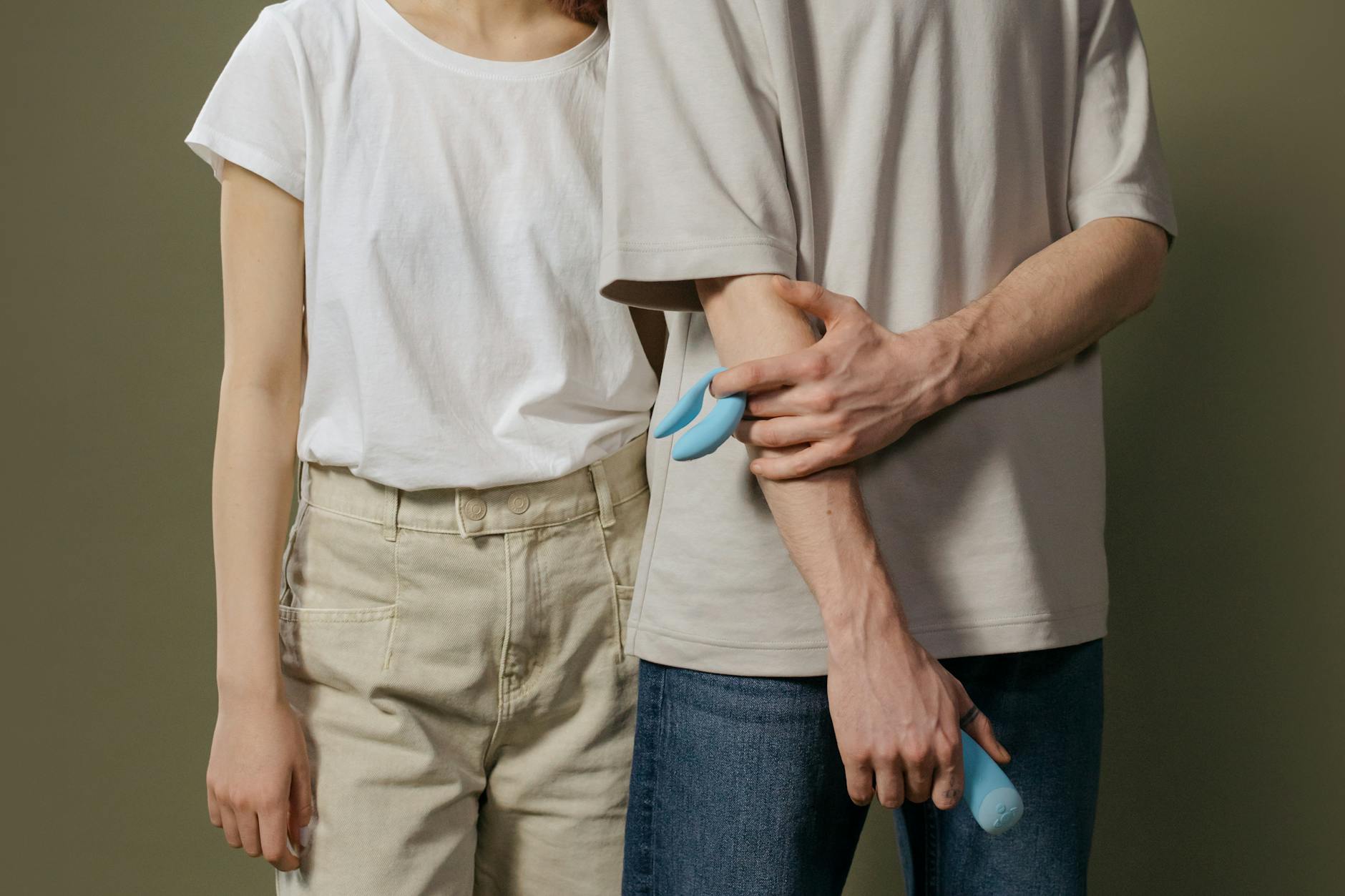
Photo by cottonbro studio on Pexels
When it gets complicated
Sometimes a partner says no. They're uncomfortable, they feel threatened, they have shame around toys, or they just don't want them in the bedroom. That's their right, but it's also worth exploring what's underneath.
Is it religious or cultural? Shame from their own upbringing? Genuine concern they're not enough? Sensory preference? Those are all different conversations with different solutions.
If you're committed to integrating toys and they're committed to not having them, you have a few options: you use them solo and keep partnered sex separate, you find middle ground (maybe toys are okay solo but not together), or you accept this is a genuine incompatibility and move on.
But most of the time, the "no" softens once they understand it's not a referendum on them. It's just you knowing your body.
The real shift that happens
Here's what I've seen repeatedly in my practice: when someone successfully brings their solo pleasure tools into partnered sex, something opens up in the relationship. It's not the vibrator itself—it's what using it represents. You're saying, "My pleasure matters, and I'm not willing to fake it or shrink myself to make you comfortable." You're also saying, "I trust you enough to show you exactly what I need."
That kind of vulnerability is contagious. Partners often reciprocate by getting honest about their own needs, fantasies, or insecurities. Suddenly sex becomes less about performing and more about connecting.
The lemon clitoral vibrator is just the vehicle. The real intimacy is the honesty.
FAQs
How do I know if my new partner will be okay with toys?
You don't until you ask. But here's a tell: if they're secure and open-minded about other things in life, they're usually secure and open-minded about this too. Start the conversation early, before things get physical. Frame it as part of knowing yourself, not as a complaint about them.
Can I introduce a lemon sexual toy without telling them first?
Technically yes. Practically no. Surprise toys create surprise resentment. Even if they say yes in the moment, there's a good chance they'll feel blindsided and won't want to use it again. Do the talk first.
What if they want to use the lemon clitoral vibrator but I'm not comfortable with that?
Set that boundary. You own your toy. They can explore their own pleasure with their own tools. If they're interested in toys, support them getting one designed for their body, but your lemon vibrator doesn't have to become communal property.
How long should I wait before introducing a vibrator to a new relationship?
When it feels honest and the relationship has a foundation of basic trust and communication. For some couples that's the first month. For others it's three months. There's no timeline. The rule is: don't introduce it if you're hiding it or ashamed of it. Only introduce it when you're matter-of-fact and confident about it.
Does using a lemon vibrator solo mean I'll have trouble having orgasms with a partner?
Not necessarily. Some people find that partnered sex without the vibrator feels different and equally satisfying. Others notice it takes longer. Both are normal. If you want to maintain flexibility, varying your solo routine helps. Sometimes use the vibrator, sometimes don't. Your body stays adaptable.
What if my partner gets obsessed with using the vibrator every time we have sex?
That's a conversation. If you notice a pattern where they always want it involved, check in: "I love using this together, but I also want to explore other ways. Should we mix it up?" If they can't enjoy sex without it, that's their version of dependence and might be worth exploring with a therapist together. Most of the time though, the initial novelty wears off naturally and things balance out.
The closing thought
Using a lemon clitoral vibrator during partnered sex isn't a failure of traditional intimacy. It's an expansion of it. You're not replacing your partner. You're inviting them into a more complete version of your sexuality.
The couples I work with who integrate toys successfully are usually the ones who stay together longer and report higher satisfaction overall. Not because of the toy itself, but because they learned to communicate about desire, comfort, and preference without shame.
Start with honesty. The vibrator is just the easy part.
If you're navigating this transition or feel stuck in the communication piece, reach out to us at Hello Nancy Official. We're here to talk through it.
Related reading
If you're rebuilding intimacy after a period of distance or solo exploration, you might find these helpful: