Let's talk about what actually changes
Menopause rewires sensation. It doesn't erase it. That's the part nobody tells you straight, and it's crucial to understand before you panic that your favorite lemon vibrator has stopped working the way it used to.
Here's what happens: estrogen drops, tissue thins, blood flow patterns shift, and the pelvic floor loses some of its elasticity. Your clitoral vibrator still sends the same electrical signals to the same nerves. What's different is how those nerves receive the message. Think of it like turning up a speaker in a room with acoustics changing. The volume is the same. The sound travels differently.
I've worked with hundreds of couples navigating this transition, and the pattern is almost always the same: panic, then adjustment, then often deeper pleasure than before.
How hormonal shifts affect vibrator sensation
When estrogen drops, the tissue around your clitoris becomes thinner and less hydrated. This sounds like a problem. In some ways it is. In others, it's an upgrade.
Thinner tissue means less cushioning between the surface and the nerve clusters underneath. Direct mechanical vibration can feel sharper than it used to. A toy you loved at 35 might feel intense or uncomfortable at 55. This doesn't mean something is wrong with you. It means your tissue has genuinely changed, and your toy selection should change with it.
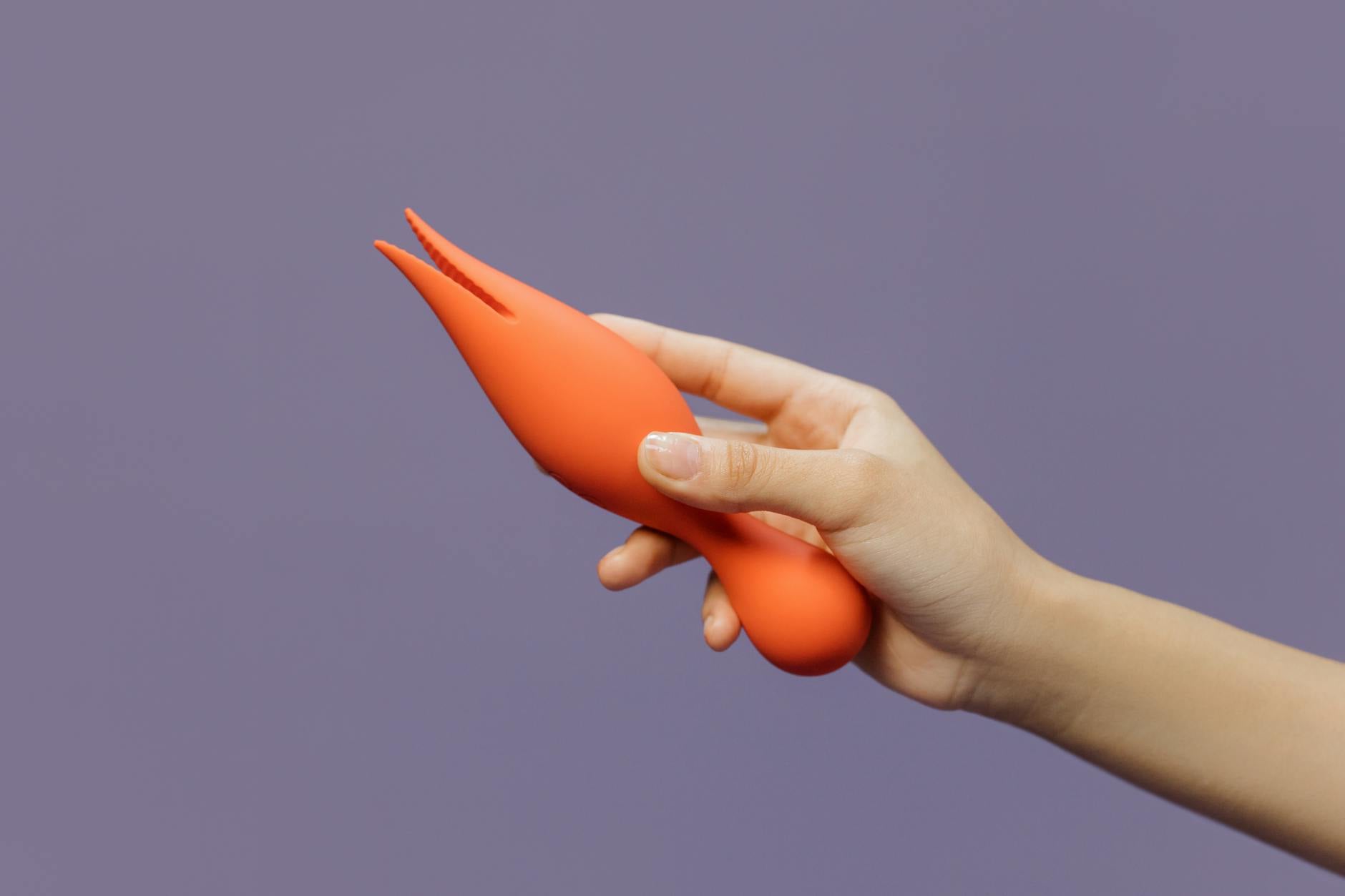
This is where air-suction clitoral vibrators like the Lem make a real difference. Instead of vibrating directly against the tissue, air-suction technology creates a gentle seal and stimulates through waves of pressure. For perimenopausal and post-menopausal bodies, that difference between direct vibration and suction pressure is the difference between ouch and yes.
The lubrication factor is bigger than you think
Lubrication isn't just about comfort during penetration. It's also about how external toys feel against the skin. When estrogen drops, natural lubrication decreases everywhere, not just inside.
Your clitoris is covered in delicate mucous membrane. That membrane depends on systemic hydration and estrogen-dependent moisture to feel supple. Add a vibrator to dry tissue and friction increases. Add the same vibrator to tissue with adequate lubrication and sensation transforms.
Here's what I tell my clients: water-based lubricant isn't a sign you're broken. It's a tool that changes the entire experience. Use it on your clitoral vibrator the way you'd use it on a vulva. A small amount on the toy before use, reapply every few minutes if you're going longer than ten minutes. Your nerve endings will thank you.
For lemon vibrators and other silicone toys, water-based is non-negotiable. Silicone-based lubes degrade silicone. Stick with water-based, and notice how sensation opens up.
Why arousal takes longer now (and that's not bad)
The chain reaction between hormonal signals and physical arousal slows down. You know that feeling where you used to get turned on in thirty seconds? That happened because of estrogen priming your nervous system to respond quickly. Post-menopause, that priming phase is shorter or gone.
This is not dysfunction. This is a different tempo. And here's the thing: slower arousal often means deeper arousal. The rush is replaced with something more sustained. I've had clients tell me that once they stopped chasing the quick intensity of their thirties, they discovered orgasms in their fifties that felt more profound.
When you're using a vibrator, this means starting earlier in your intimate time. Spend ten to fifteen minutes on sensation without the vibrator. Touch, breathing, conversation, whatever builds your arousal. Then introduce the lemon vibrator or air-suction toy. You're not trying to force the old timeline. You're working with your body's actual rhythm now.
The pelvic floor gets tighter and looser in weird ways
Estrogen supports pelvic floor muscles. When it drops, those muscles lose tone and elasticity simultaneously. They can feel tight but also less resilient. This affects how vibration feels.
A tight pelvic floor can make direct vibration feel overwhelming. It can also make it harder to relax into pleasure because your muscles are bracing. Learning to consciously relax your pelvic floor becomes as important as Kegel exercises were before.
Here's a practice that works: before using your vibrator, lie down and take five deep breaths while imagining your pelvic floor releasing on the exhale. Not clenching, not holding. Releasing. Then start with your toy at the lowest setting. Let your body adjust. Your pelvic floor will often soften naturally once it realizes nothing bad is happening.
Why some women report better orgasms post-menopause
This isn't magical thinking. There's real physiology here. Post-menopause, your nervous system has less hormonal noise. The constant cycle of estrogen and progesterone fluctuations that affected your mood, focus, and yes, your sexual response, is gone. For many people, that clarity creates space for deeper sensation.
Second, you've likely shed some of the performance pressure. You're not concerned about fertility. You're not timing sex around a cycle. Many people report that removing those background stressors alone transforms the experience.
Third, you probably know your body better. You know what you like. You're less shy about asking for what you want. You might be using a better toy. You've had decades to figure out what actually works instead of what you thought was supposed to work.
All of that combines into something that can genuinely feel better than before.
Adjusting your lemon vibrator use for post-menopause comfort
Four practical shifts that make a big difference.
Start at the lowest intensity. If your lemon clitoral vibrator has multiple settings, begin at the gentlest. You can always increase. You can't un-feel too much too fast.
Use lube every time. This is not optional. Water-based lubricant on a clitoral vibrator is like adding richness to a dish that felt flat. It changes everything.
Budget more time. Arousal takes longer. Pleasure takes longer. That's not a setback. That's an invitation to slow down. Many people find they actually prefer this.
Consider your toy design. Air-suction vibrators like the Lem work particularly well for post-menopausal bodies because they stimulate through pressure waves rather than direct mechanical vibration. The sensation is gentler on thinner tissue while still being incredibly effective. If direct vibration has started feeling uncomfortable, switching to an air-suction toy is often the answer.
When to talk to a doctor
If pain appears, don't wait. Genitourinary syndrome of menopause is real, treatable, and has nothing to do with your toy or your desire. A menopause-informed GP or gynecologist can prescribe topical estrogen creams that make a huge difference in tissue thickness and lubrication.
If your clitoris feels numb or sensation has almost completely disappeared, hormonal changes might be part of it, but there could be other factors. Diabetes, medication side effects, vascular issues. Get checked out.
Desire dropping doesn't have to mean testosterone therapy is right for you, but it's worth discussing with someone who specializes in menopause medicine. Testosterone is available and for the right person, genuinely life-changing.
The relationship piece matters more than you'd think
If you have a partner, how they respond to your changing pleasure patterns matters. Some partners panic too. They assume they've done something wrong or that you've stopped finding them attractive. That's a separate conversation that needs to happen before it festers.
Here's what I tell couples: menopause is about your body changing. The relationship is about how you adapt together. You might need a different rhythm. You might need more touch before toys. You might need to talk more or laugh more or be more playful about figuring it out. That's actually an opportunity to rebuild intimacy, not a setback.
Solo exploration is equally valuable. Many single people use menopause as a chance to rediscover their own pleasure without any pressure to perform or coordinate. Your vibrator becomes a tool for learning what your body actually wants now, not what it wanted twenty years ago.
FAQ: Your actual questions about vibrators and menopause
Q: Does menopause mean I can't use my favorite vibrator anymore?
No. It might feel different, and you might need to adjust how you use it (more lube, lower intensity, longer warm-up). But most people don't have to retire their toys. Some do find that switching to air-suction designs is more comfortable, but that's a preference, not a requirement.
Q: Is it normal for vibrators to feel too intense after menopause?
Completely normal. Thinner tissue is more sensitive to direct vibration. It doesn't mean your body is broken or that you'll never enjoy intense sensation again. It means you might start at a lower setting and build up, or switch to a toy type that works better for you.
Q: Does lube make using a vibrator feel less good?
Actually, it often makes it feel better. Lube reduces friction, allows the toy to move more smoothly, and prevents skin irritation. For post-menopausal bodies, it's usually a game-changer.
Q: Should I be using a different type of vibrator now?
Not necessarily, but air-suction lemon vibrators and clitoral suckers are designed to be gentler on delicate tissue while still delivering intense sensation. If direct vibration has become uncomfortable, they're worth trying.
Q: Will my sexual pleasure ever feel normal again?
Yes, but "normal" might look different. It might take longer to get there. It might require different tools. It might be quieter or more contemplative. Most of my clients report that once they stop fighting the changes and start working with them, their pleasure deepens significantly.
Q: Is it okay to use a vibrator during perimenopause?
Absolutely. Your body is already changing, and exploring sensation during that transition can help you understand what you like as your hormones shift. It's actually a great time to experiment with different toy types and intensities.
The long view
Menopause doesn't end your sexual life. It rewrites the script. You get to decide whether that rewrite is a tragedy or a plot twist. The couples and individuals I work with who navigate this transition best are the ones who treat it like a puzzle to solve together with their own body, not a problem to fix.
Your lemon vibrator hasn't aged out. You haven't aged out. Your pleasure matters just as much at 55 as it did at 35. The tools and the technique might evolve. The capacity for sensation, connection, and deep satisfaction often actually expands.
Ready to understand more about what works for your body right now? Check out the complete guide to lemon vibrators for deeper dives into toy types, materials, and how to choose what's right for you. Or if you'd like to talk through your specific situation, reach out to Hello Nancy. We're here to help you figure it out.