Here's the thing nobody tells you
You and your partner like different things. This is not a problem to solve. It's a baseline fact, and the sooner you stop treating it like a negotiation, the sooner pleasure becomes possible for both of you.
Sensitivity differences run deep. One person might need light, sustained suction. The other might be uncomfortable with sensation that feels too intense or overwhelming. Enter a clitoral vibrator like the Lemon, which has multiple intensity levels and a design that works across a wide sensitivity spectrum. But having the right tool doesn't automatically create the conversation you need.
Why sensitivity differences derail so many couples
Honestly, it's not about the toy. It's about what sensitivity feels like in a relationship. If you're the more sensitive partner, intensity from your partner can feel aggressive or dismissive. If you're the partner who loves intensity, pulling back feels like holding yourself hostage. Both perspectives are real. Both matter.
When a lemon vibrator enters the picture, it often becomes a stand-in for these unspoken tensions. "You're too rough" becomes "That toy is too much." "You never push hard enough" becomes "That toy doesn't work for me." The toy isn't the problem. The conversation is.
The sensitivity spectrum (and where you actually land)
Think of sensitivity as existing on a spectrum rather than as a binary. Some people love firm, direct clitoral stimulation and want multiple patterns at high intensity. Others need lighter touch, gradual build-up, or even stimulation that avoids direct contact altogether. Most people live somewhere in the middle, but the middle looks different depending on the day, their stress level, medication they're taking, or where they are in their cycle.
A lemon vibrator's suction-based design naturally sits in a gentler space than traditional vibrators. It doesn't rely on buzzing friction. Instead, it creates a pulsing pressure that many people find less overwhelming. The Lem, Hello Nancy's core clitoral vibrator, has intensity settings that let each partner find their own comfort zone without forcing a compromise.
How to talk about it without it becoming a conflict
Start before the toy is anywhere near the bedroom. Frame the conversation around curiosity, not critique. "I want to understand what feels good for you" lands differently than "You're too sensitive" or "You need to be braver." Ask your partner what they notice about their body. Do certain sensations feel sharp or overwhelming? Do they need warm-up time? Do they prefer one type of stimulation over another?
Listen without translating their answer into something that makes sense to you. Your partner's sensitivity is not a personal criticism of your touch. It's data about their nervous system. Treat it that way.
When you do introduce a lemon vibrator, tie it to pleasure, not to fixing them. "I want us both to feel amazing" is different from "Maybe this will help your problem." One opens a door. The other closes one.
The practical setup that actually works
Three things change the dynamic:
Start with settings they choose, not what you'd choose. If your partner is more sensitive, they pick the intensity level first. Experience it together at their comfort level. Intensity can always go up. Trauma from going too fast can take months to undo.
Create space for them to say no or adjust mid-experience. This sounds simple but it's rare. Most couples establish a toy and then feel locked into using it a certain way. Build in a simple signal: if something isn't working, it's a one-word pause, not a full stop. Pause, adjust, resume. No shame, no explanation required in the moment.
Use the toy as a bridge, not a replacement for touch. The Lem works beautifully as foreplay or as part of partnered stimulation, not just as the main event. If one partner loves intensity and the other doesn't, start with the toy at low intensity while your hands do something gentler elsewhere. You're building pleasure together, not trading off.
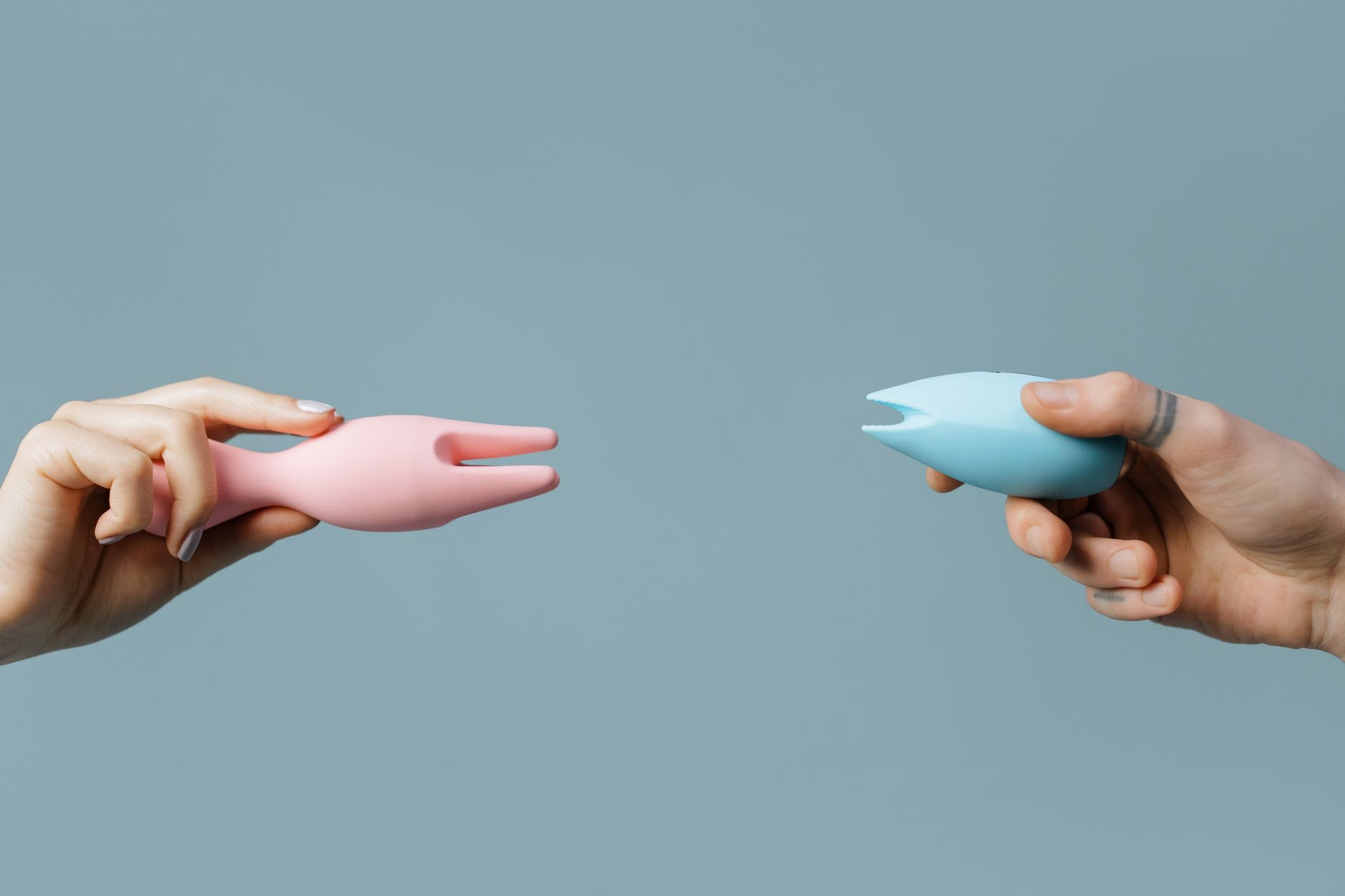
Photo by cottonbro studio on Pexels
When one partner is significantly more sensitive
If your partner's sensitivity is at one extreme, the goal isn't to change them. It's to design pleasure around them. Sensitive tissue can be more reactive, not less responsive. Sometimes what looks like low sensitivity is actually high sensitivity expressing as protective shutdown.
For partners who experience actual pain with typical vibrators, a lemon clitoral vibrator's suction design often works where buzzing vibration doesn't. The sensation is different enough that it can bypass whatever was causing discomfort before. Start at the lowest setting. Let them control the device. Notice what happens when they feel agency.
If pain persists, see a healthcare provider who specializes in pelvic pain or genitourinary health. Sensitivity differences are normal. Pain is information telling you something needs attention.
When one partner wants more intensity
If you're the partner craving stronger sensation, the temptation is to go rogue and use the toy solo at max intensity, then feel resentful when partnered sex feels boring. Don't do that. Instead, build intensity gradually in partnership. Show your partner what turns you on. Use the lemon vibrator together at higher settings. Let them see that pleasure isn't something they're failing to give you. It's something you're building together.
Solo exploration matters too. Know your own body. When you arrive at partnered sex knowing exactly what works for you, the conversation shifts from "Fix me" to "Here's what I love, and I want to share it with you."
The conversation about pleasure equity
Here's what actually matters: Does both of you leave the experience feeling good? Not the same kind of good. Not the same intensity. But genuinely satisfied.
If you're always compromising on intensity and resentment is building, that's a sign the conversation needs to shift. Maybe sometimes you use the toy at your preferred intensity while your partner is involved differently. Maybe you take turns. Maybe some experiences are designed around one person's pleasure and some around the other's. That's not settling. That's relationship mathematics.
A lemon vibrator helps because it gives you options. Low settings for gentleness. High settings for intensity. The design that doesn't rely on harsh buzzing means less chance of overstimulation for sensitive partners. But the tool only works if the communication underneath is solid.
What happens when you actually prioritize both sensitivities
Couples who navigate sensitivity differences well report something interesting: pleasure deepens. When you're not fighting your partner's body or resenting yours, sex stops being a performance. It becomes something you actually like doing together.
That shift doesn't happen because you found the perfect toy. It happens because you stopped treating sensitivity as something to overcome and started treating it as information about how to pleasure each other.
The Lem works for this because it's designed around the reality that bodies are different. Multiple patterns. Multiple intensities. A design that's less likely to cause discomfort. These aren't features added on. They're built in. That foundation makes conversations about sensitivity easier because the tool itself isn't insisting on one-size-fits-all.
People also ask
How do I know if my partner's sensitivity is pain or preference?
Pain stops or limits the experience. Preference shapes it. If your partner says "that's too intense" and you dial it back and they're happy, that's preference. If they say "that hurts" or if they tense up, pull away, or shut down, that's pain signaling. Pain needs medical attention. Preference needs communication and adjustment. Don't blur the line between them.
Can a lemon vibrator feel less intense than other vibrators?
For most people, yes. Suction-based clitoral vibrators like Hello Nancy's Lem feel fundamentally different from traditional buzzing vibrators because they don't rely on friction. The sensation is more like rhythmic pressure than vibration, which many people find less overwhelming. But intensity is still adjustable, and everyone's nervous system is different. Start low and listen to your partner's feedback.
What if one partner wants to use the toy and the other doesn't?
Respect that. A toy isn't mandatory. If one partner is uncomfortable with vibrators, the conversation is about why, not about changing their mind. Is it a comfort thing? A sensory thing? A belief thing? Once you understand the root, you might find alternatives that work better. Sometimes that means a different toy. Sometimes it means the toy stays solo-only. Both are fine.
Should we use the same toy or get different ones?
Shared toys are great for partnered play. But if sensitivity differs significantly, separate toys designed for each person's preference might actually strengthen intimacy. You each get to experience pleasure exactly how your body likes it, then bring that into partnered moments together. It's not a competition for the one good toy. It's both of you having what works.
How do I bring up sensitivity without making my partner feel broken?
Frame it as "I want to understand your body better" not "Something's wrong with you." Ask what feels good. Listen. Experiment together without judgment. And remember that sensitivity can shift with stress, hormones, medication, and life phase. What didn't work six months ago might work now. Stay curious instead of locked into old patterns.
Can sensitivity differences improve with practice?
Sometimes. Stress and anxiety can make the nervous system overprotective, which feels like heightened sensitivity. Therapy, breathwork, or just time in a secure relationship can shift that. But some people are naturally more sensitive, and that's not something to fix. It's something to work with. The goal is pleasure for both partners, not making one partner match the other's sensitivity.
The bottom line
Sensitivity differences aren't a bug in relationships. They're the actual texture of being two different people who happen to want to be intimate together. A lemon vibrator, with its range of intensities and different sensation profile, makes space for both of you. But the real tool is the conversation. Start there, and the toy becomes easy. Skip it, and even the perfect vibrator won't help.
Want to explore what works for your specific dynamic? Reach out and let's talk about it.
Sources
Gottman, J. M., & Silver, N. (2015). The Seven Principles for Making Marriage Work. Harmony Books.
Ehrenberg, M. F. (2012). An evidence-based overview of the diagnosis and treatment of erectile dysfunction and female sexual dysfunction. Current Sexual Health Reports, 4(2), 56-68.
Emans, S. J. (2018). Vulvodynia and sexual dysfunction: a multidisciplinary approach. Current Sexual Health Reports, 10(1), 26-33.