Here's what nobody tells you about desire mismatch
One partner wants sex three times a week. The other wants it three times a month. Neither person is wrong. Neither person is broken. But living in that gap creates a slow tension that corrodes everything else.
For years I've watched couples solve this with the wrong tool. They therapize it ("Let's talk about our needs"), they compromise it ("How about twice a week?"), they schedule it ("Wednesday and Saturday"), or they white-knuckle through resentment until someone's touch starts to feel like an obligation instead of an invitation.
What actually works is reframing what sex and pleasure mean in your relationship. And a lemon clitoral vibrator, used thoughtfully, becomes part of that conversation.
The frequency mismatch is rarely about desire itself
This is the part therapists get wrong in soundbites. When one partner wants sex more often, it's not always because they have a higher sex drive. Often it's because they need physical touch to feel connected, loved, or seen. It's the thing that reminds them you choose them.
The partner who wants it less? Usually isn't saying no to pleasure. They're saying no to a specific kind of pressure, exhaustion, or disconnect. They want sex on their terms, at their pace, without the mental load of disappointing someone they love.
Add in hormonal shifts, work stress, parenting, health changes, or just being touched out from a day with other humans, and it becomes clear. This is not a frequency problem. It's a mismatch in how each person gets to experience pleasure.
A clitoral vibrator changes the equation because it separates two things: your partner's needs and your pleasure.
Why this conversation needs to happen before the vibrator does
I'm about to tell you to use a lemon vibrator to solve this. But first, say this out loud to your partner: "I love you. And I also need sex on my schedule, not a compromise schedule."
That's the hard part. Not the vibrator.
Most couples avoid this because they think it's selfish. It's not. Wanting to experience pleasure without guilt, without feeling rushed, without performing to someone else's timetable, is not selfish. It's sane.
Once that's on the table, the vibrator becomes what it actually is. A tool that lets your partner get their physical connection needs met without you having to overextend yourself. And if you're curious, you can sometimes join in. But the point is you're not obligated.
This flips the entire dynamic. Instead of "I have to have sex more often," it becomes "I get to experience pleasure on my terms." That's a different nervous system state entirely.
How a lemon clitoral vibrator fits into the practical reality
Let's get specific. Your partner initiates. You're not feeling it. You have a few options now.
Option one, the old way. You say no. They feel rejected. You feel guilty. Resentment collects. Everyone loses.
Option two, the new way. You say, "Not right now. But I'd love to use my lemon vibrator while we spend time together." You can be in the same room. You might touch. You might talk. They get closeness and touch. You get pleasure on your terms. The pressure disappears.
This works because your partner's actual need (physical connection, feeling wanted, not being rejected) is met. Their need for orgasm or sexual activity isn't met from you directly, but it doesn't have to be. That's the shift.
When you start with something like the Lem, which uses suction instead of pure vibration, you control the intensity completely. Patterns 1 through 3 are playful and exploratory. By pattern 5 or 6, you're in deep focus. Your partner can watch, can hold you, can talk to you. Or can step back and respect your space.
The vibrator isn't a replacement for partnered sex. It's a parallel track that makes it okay for your desires to not align 100 percent of the time.
The emotional mechanics that actually matter
Here's what shifts when you normalize this. Your partner stops asking "Can we have sex?" and starts asking "Can I spend time with you while you explore?" That's a fundamentally different request. Less pressure. More intimacy, not less.
You stop resisting touch because you're not afraid it will escalate into an obligation. Sometimes it does escalate. Sometimes it doesn't. You're in control of the pace.
Most couples who make this shift report that they actually want partnered sex more often after a few weeks. Why? Because the pressure is gone. Sex stops being something you have to do and starts being something you choose. That choice is where desire lives.

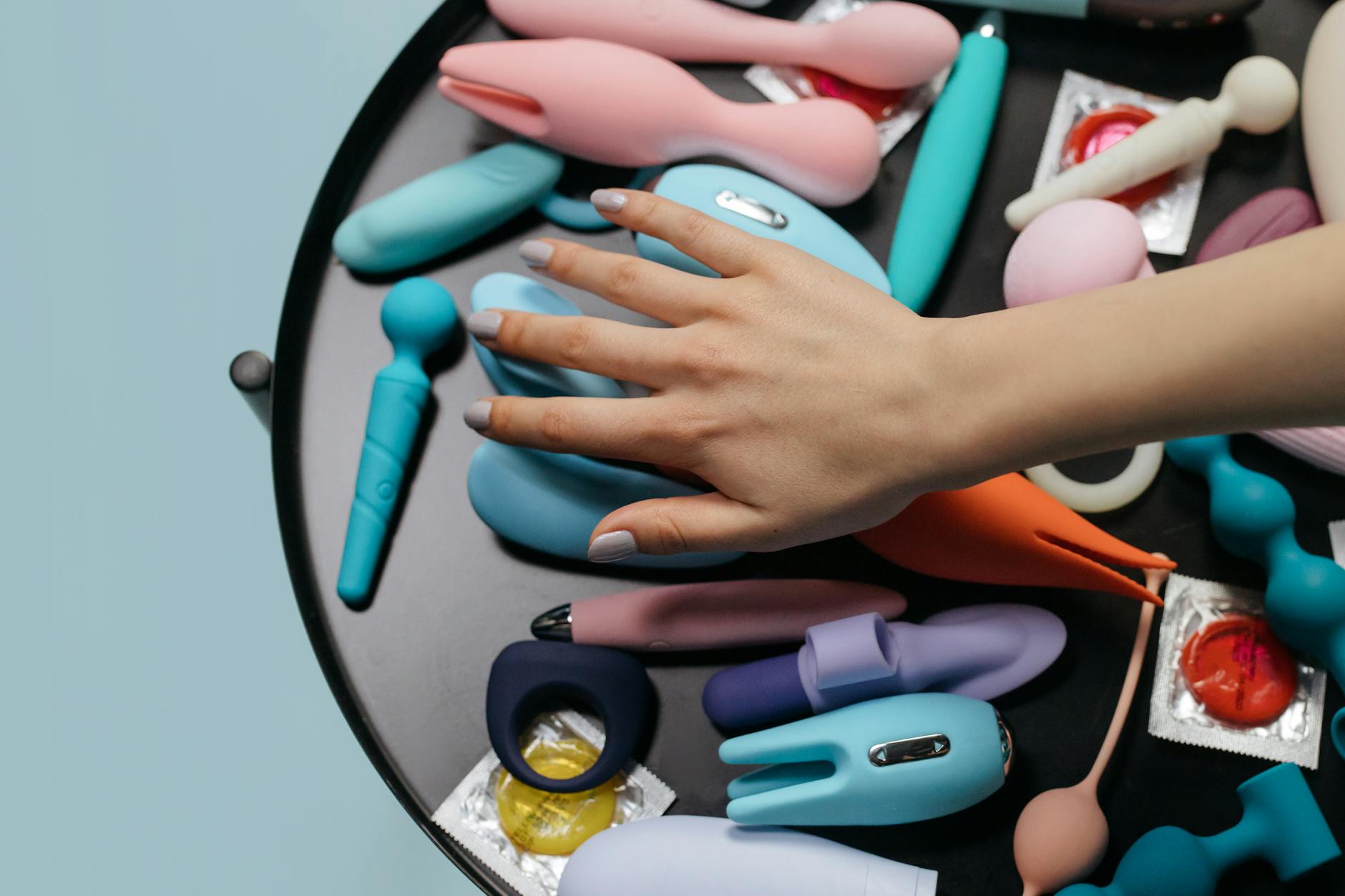
Photo by cottonbro studio on Pexels
When to use this during partnered time
Timing is everything. If your partner tends to initiate in the evening, and you know that's when you're most depleted, build in a buffer. Maybe you say yes to time together, but you set a boundary. "I want to be present with you for 20 minutes. Then I'm going to use my vibrator. You're welcome to stay."
That frame keeps both people's needs visible. You're not disappearing. You're negotiating how you want to connect.
For partners who need more frequent touch, this can actually feel better than pressured sex. You get to be close to someone you love while they're in a state of pleasure and relaxation. That's intimacy in a different register.
If you're worried about your partner feeling replaced by the vibrator, that conversation needs to happen first too. A clitoral vibrator doesn't replace partnered sex. It prevents resentment from building when your rhythms don't match. And resentment kills sex way more effectively than any vibrator ever could.
The practical details that change everything
Start with a lemon sucker like the Lem if you haven't used one before. Suction feels completely different from vibration because it's drawing sensation inward instead of buzzing across the surface. This means you can use it for longer without soreness or overstimulation.
When your partner is in the room, keep the intensity moderate at first. Patterns 1 through 3 are perfect for this. They're strong enough to feel good but not so intense that you lose awareness of your partner's presence.
If you want penetration alongside vibrator use, water-based lubricant is essential. Your partner can be inside you while you use the lemon vibrator on your clitoris. That's full-spectrum partnered pleasure where you're both getting what you need.
But if you just want solo pleasure with your partner nearby, that's also completely valid and often feels less pressuring.
What happens after the first few times
After a couple of weeks of this, the dynamic usually softens. Your partner feels less desperate and more secure because sex stops being a scarcity they're competing for. You stop feeling hunted or obligated.
Magically, you often find yourself wanting partnered sex more. Not because you have to. Because the pressure released and desire came back.
Some couples find a rhythm where there's frequent partnered sex plus regular solo exploration time. Others find that when the pressure's off, they both want connection more often. Every couple is different.
The point is the frequency problem wasn't actually the problem. The problem was that someone's needs weren't being heard. A vibrator, by itself, doesn't fix that. A conversation plus a vibrator, and a real willingness to separate your pleasure from your partner's, does.
When desire frequency mismatches get bigger
If the gap is extreme (one partner wants sex daily, the other monthly), this tool helps but isn't the whole answer. That's when you need couples counseling with someone who specializes in sexual dynamics and understands that mismatched desire isn't a sign the relationship is doomed.
Sometimes the frequency gap reflects a real incompatibility. Sometimes it reflects that one person is depleted and needs actual rest, not more sex. Sometimes it's a symptom of something else: unresolved conflict, health changes, depression, or a shift in how you experience attraction to your partner.
A vibrator can hold space while you figure that out. It can keep physical intimacy alive when you're navigating those bigger questions. But it's not a substitute for real conversation and, sometimes, professional support.
FAQ
Can using a vibrator alone make my partner feel rejected?
Possibly, if the conversation hasn't happened first. The vibrator isn't the issue. The issue is whether your partner understands that you saying no to sex isn't a rejection of them. Have that conversation before introducing a vibrator. Make it clear: this tool keeps us both happy and connected. It's not a replacement. It's a parallel path.
What if my partner wants to be inside me while I use my lemon vibrator?
That works beautifully. Water-based lubricant is essential because the vibrator's intensity can create friction. Suction toys like the Lem feel different when you're also penetrated because the sensations layer differently. Start slow, communicate about pressure and pace, and pause if anything feels uncomfortable.
How often should we actually be having partnered sex if we're also doing solo exploration?
There's no right number. Some couples find they want partnered sex more when the pressure's off. Others find a rhythm of two to three times a week partnered, plus solo time in between. The answer is whatever both people genuinely want, not a compromise that leaves both of you frustrated.
Is it weird to use a vibrator while my partner watches?
Not even slightly. It's intimate, vulnerable, and deeply human. Some partners find it incredibly arousing. Others just like the closeness. If you're nervous, start with low light and clear communication about what you're comfortable with.
What if I'm worried my partner will get jealous of the vibrator?
That's worth saying out loud. "I want to make sure you know this isn't about you. This is about me getting to experience pleasure without pressure." Most partners feel relief when the pressure to provide sex at a certain frequency lifts. But if jealousy persists, that's a conversation worth having with a couples therapist.
Can a lemon clitoral vibrator actually help us have more connected sex?
Yes. When the pressure to have sex at someone else's frequency disappears, desire often returns. Sex becomes something you choose instead of something you're obligated to provide. That choice is where real connection lives.
The bottom line
Mismatched desire frequency is one of the most common relationship problems nobody actually talks about directly. We hint at it. We resent it. We schedule around it. We compromise until both people feel unsatisfied.
What actually works is separation plus connection. Letting your partner meet some of their needs independently while staying emotionally and physically close to you. A lemon clitoral vibrator becomes the tool that makes that possible.
But the vibrator is only half the work. The other half is saying, out loud, that your pleasure matters as much as your partner's. That you don't owe anyone more sex than you want to have. That a thriving relationship is built on both people's actual desires, not a compromise that slowly kills attraction.
If frequency mismatches have been creating tension in your relationship, and you're not sure how to start the conversation, reach out. These dynamics shift when both people feel heard.