Here's the thing about arousal timelines
One of you walks into the room and your body is ready. The other one needs fifteen or twenty minutes of warm-up to get there. Neither of you is broken. You're just different. And when you try to sync those two timelines without help, one person ends up pressured and the other ends up frustrated.
This is one of the most common friction points couples bring to me, and it's almost never about desire. It's about the architecture of how desire builds in two different bodies.
 Photo by cottonbro studio on Pexels
Why arousal speed matters more than you think
When partners have different arousal timelines, the slower partner often feels rushed. The faster partner waits. Then resentment settles in quietly, disguised as "not being in the mood" or "not feeling connected." But here's what's actually happening: the rhythm doesn't work for both of you.
The research is clear. People with clitorises often take longer to reach arousal than partners without them. But that's an average. The real variation is person to person. Some people are wired to heat up fast. Others need extended foreplay. Both are normal. Both deserve to happen at their pace.
The problem isn't the difference. The problem is pretending it doesn't exist and trying to force synchronized timing anyway.
How a clitoral vibrator changes the equation
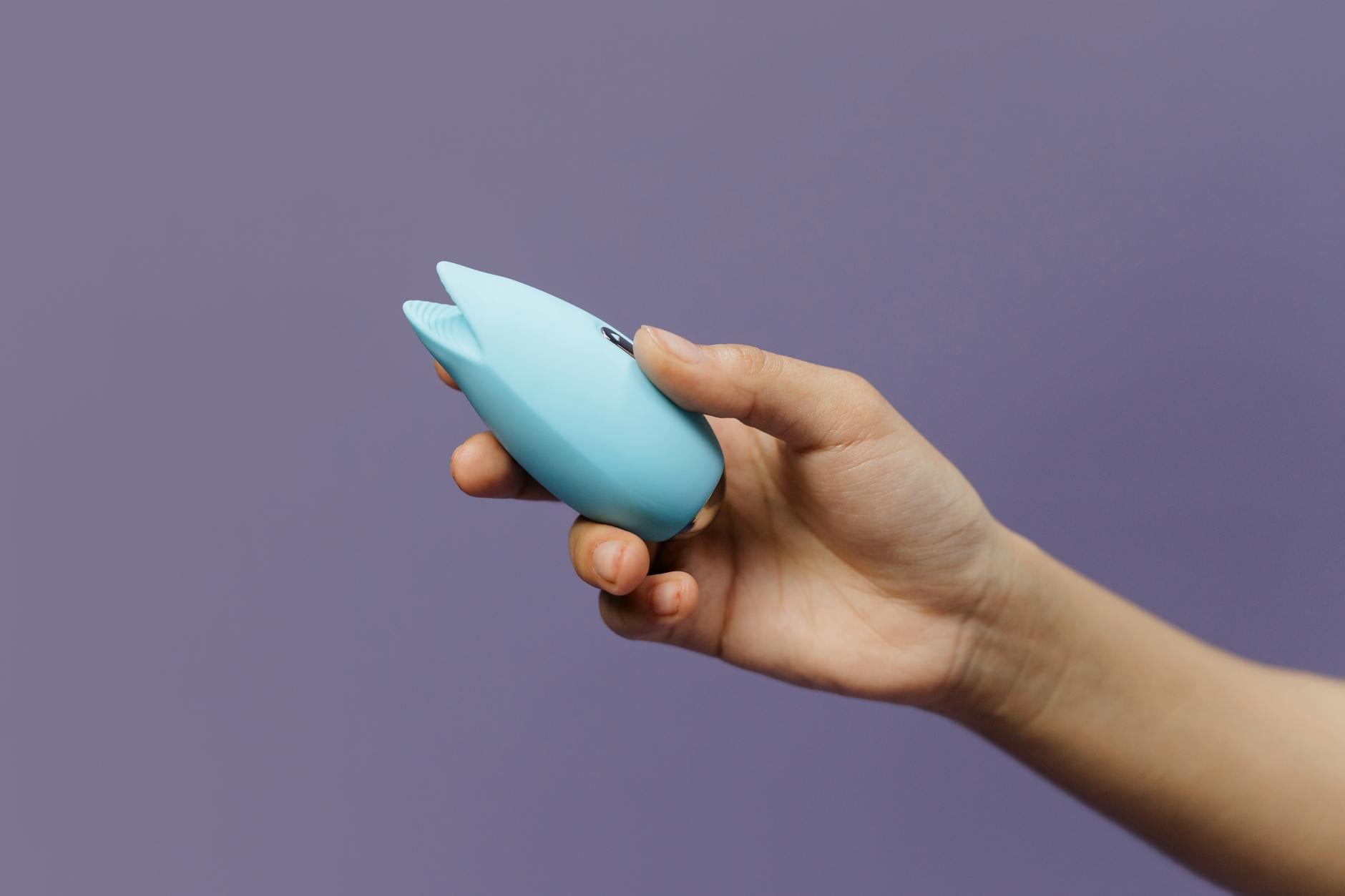
A lemon vibrator like the Lem does something specific: it applies direct, consistent stimulation to the clitoris. That matters because clitoral tissue doesn't require the same warm-up that penetrative sensation does. You can start using it earlier in foreplay without it feeling jarring or uncomfortable.
This gives you three options that didn't exist before:
Option 1: The faster partner uses it on the slower partner. You're not just waiting. You're actively helping arousal build. This transforms idle time into intimate foreplay.
Option 2: The slower partner uses it solo while the faster partner engages in other foreplay. Sometimes all that matters is having the tool in your hands. You're taking agency over your own arousal speed instead of trying to match someone else's.
Option 3: Both of you use vibration in the minutes before partnered sex. This equalizes the arousal baseline so neither of you is arriving at intercourse from a different readiness level.
What changes is that arousal speed stops being a problem and starts being information you're actually using.
The practical setup that works
Let's talk mechanics. The slower-to-arouse partner doesn't need to feel guilty about needing time. And the faster partner doesn't need to white-knuckle through a long foreplay session. Here's how to build a rhythm that honors both:
Start 15 to 20 minutes before you want penetration to happen. The faster-to-arouse partner begins with whatever foreplay feels natural. Meanwhile, the slower partner reaches for a lemon clitoral vibrator. You're not segregated. You're not ignoring each other. You're just using the time differently.
The faster partner might kiss, touch, or stroke while the slower partner works the vibrator. Some couples find that this hybrid approach feels genuinely intimate. You're both present. You're both contributing. The stimulation is complementary, not competitive.
Start on a lower setting. The Lem has multiple patterns, so begin at level one or two. Let arousal build gradually. There's no rush to turn it up. Many people find that extended time on a lower setting feels better than fast ramping anyway.
Talk while you do this. Not about how much longer you need, but about what feels good. "I like it when you touch my neck while I use this." "This angle works better." Small adjustments make a difference.
When timing still feels hard
Sometimes the arousal gap isn't the real issue. Sometimes it's anxiety. The slower-to-arouse partner feels they're holding things up. The faster partner feels impatient or rejected. And suddenly the vibrator becomes a band-aid on a different problem.
If that's happening, the conversation needs to shift. "I need you to know I'm not frustrated with you" needs to be said out loud. "I want you to feel good, not rushed" also needs saying. The vibrator helps the mechanics. But the reassurance has to come from you.
When arousal timing reflects something deeper
Here's what I see with couples where arousal speed feels stuck: sometimes one partner is genuinely disconnected. Maybe it's stress. Maybe it's medication. Maybe it's resentment about something unrelated to sex. And their body's slow-to-warm response is the symptom, not the problem.
If that's you, a clitoral vibrator might help in the short term. But you're going to need to address what's underneath. Talk to your partner. See a therapist together if the disconnection is bigger than foreplay timing.
A lemon sexual toy is a brilliant tool for the right situation. But it's not therapy for deeper relational friction.
The arousal-as-foreplay reframe
Here's the mindset shift that changes everything: stop thinking of arousal time as something to minimize. Think of it as extended foreplay.
When one partner needs 20 minutes and the other needs five, you now have 15 minutes of shared intimate time that didn't have to feel like waiting. You get to touch, tease, talk, and build connection while the slower partner's body catches up. That's not dead time. That's actually the good part.
Mismatched arousal only feels like a problem if you're comparing yourself to some imaginary couple who sync perfectly. Real couples don't work that way. Real couples use tools. They communicate. They build rhythm together.
The Lem or any quality clitoral vibrator just makes that rhythm easier to achieve.
FAQ: Arousal timing and using a lemon vibrator
How long should foreplay actually take if arousal is mismatched?
There's no target number. The slower-to-arouse partner should get whatever time they need. That might be 10 minutes. It might be 30. The faster partner's job isn't to speed them up. It's to make that time feel good and connected. A lemon clitoral vibrator helps because it accelerates arousal slightly without making anyone feel rushed.
Is it normal for one partner to need way more time to get aroused?
Completely normal. Research shows that vulva-owners on average need more time for arousal than people without them, but the variation person to person is huge. Some people need extended warm-up. Others don't. Both versions are healthy. The problem only appears when you try to force synchronized timing.
Should I use a vibrator if I'm worried my partner will feel replaced?
Talk about it first. Explain that you're not using it instead of them. You're using it to help your body meet them somewhere in the middle. Many partners actually find this relieving. It means they don't have to white-knuckle through foreplay waiting for you to catch up. You're both getting something out of it. If your partner resists, read this guide on introducing toys to someone skeptical.
Can a lemon vibrator actually speed up arousal, or does it just feel better?
Both. Clitoral stimulation triggers physiological changes. Blood flow increases. Lubrication increases. The nervous system shifts toward arousal. You're not forcing anything. You're just giving your body the right stimulus to get there faster. That's still you. It's just you with better equipment.
What if we use a vibrator and the arousal gap is still there?
Then something else is happening. Stress, medication, relationship disconnection, or just different baseline desires. The vibrator helps when the gap is purely about physiology. If the issue is deeper, you might need to explore what's happening after a sexual hiatus or consider whether you're both actually interested in the same frequency. Those are different conversations.
Is it weird if one partner mainly uses the vibrator and the other doesn't?
No. Some people's bodies respond to vibration. Others don't. And even within that, some people use it consistently and others hardly ever need it. This isn't about equal usage. It's about what works. Use it when it helps. Skip it when you don't need it.
The real shift
Mismatched arousal stops feeling like a frustration when you stop treating it as a problem to fix and start treating it as information to work with. You're different. That's fine. You just needed a tool that helped you move at your own pace while still moving together.
A quality lemon clitoral vibrator does exactly that. It lets the slower partner warm up on their timeline. It gives the faster partner something to do with their anticipation. And it transforms waiting into foreplay.
Your arousal speeds don't have to match. Your willingness to meet each other halfway does.
Sources
Gottman, J. M., & Silver, N. (2015). The seven principles for making marriage work. Harmony.
Meston, C. M., & Frohlich, P. F. (2000). The neurobiology of sexual function. Archives of General Psychiatry, 57(11), 1012-1030.
Basson, R. (2000). The female sexual response: a different model. Journal of Sex & Marital Therapy, 26(1), 51-65.