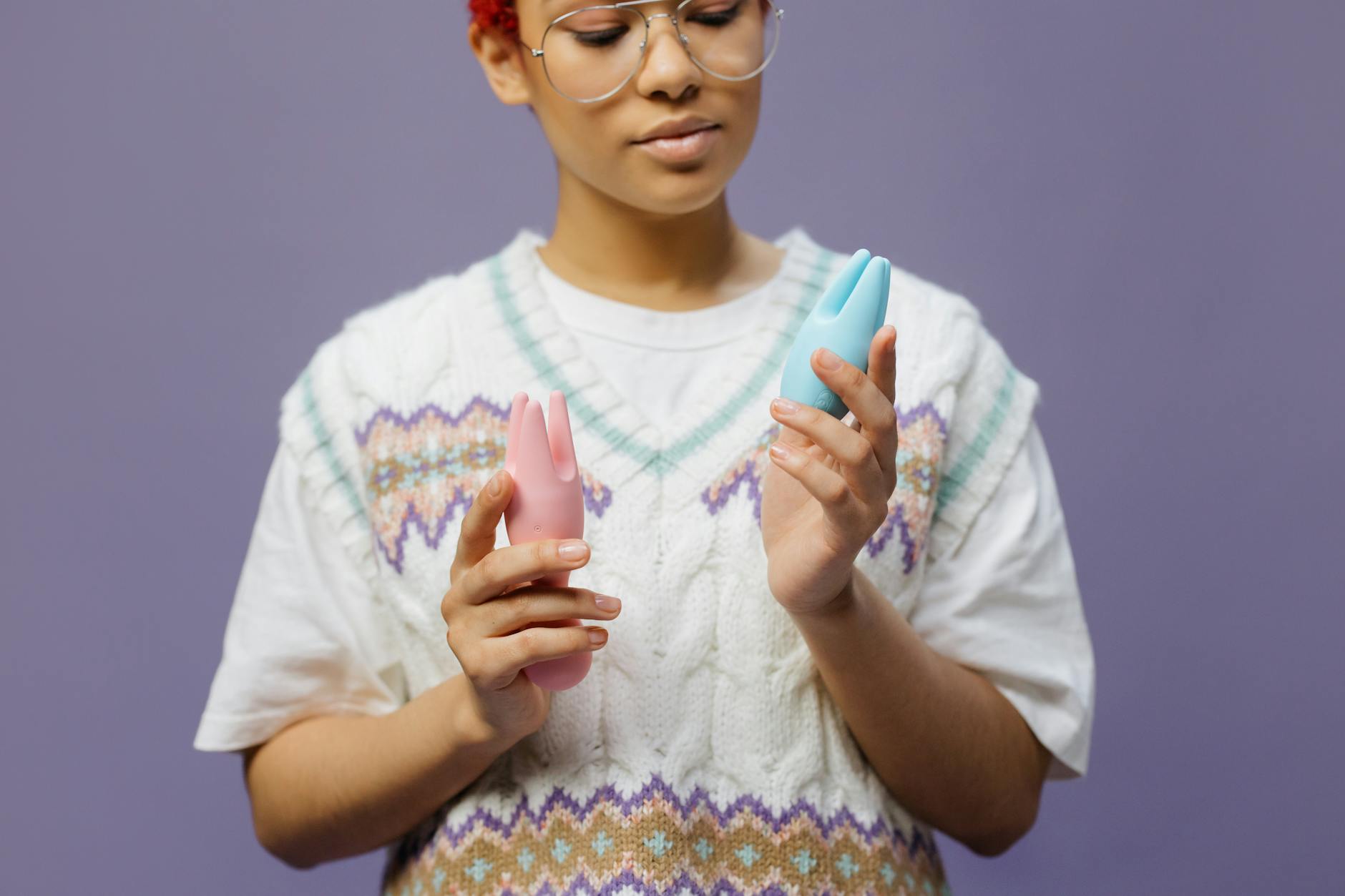
Here's what nobody tells you about pleasure after betrayal
Your body doesn't forget. After infidelity, abuse, or violation of trust in a relationship, pleasure doesn't just pause. It becomes complicated. You might feel unsafe in your own skin, disconnected from sensations that used to feel good, or guilty for wanting anything at all. That's not broken thinking. That's your nervous system protecting you, and it's smart.
What changes now is permission. You're learning to give it to yourself, slowly, in ways that feel manageable. A lemon clitoral vibrator can be part of that rebuilding, but only if you approach it as a tool for reclaiming agency, not for proving you're "over it."
Let me walk you through how to actually do that.
Why a lemon vibrator works differently in this context
When you've experienced betrayal, the difference between what's happening to your body and what you're choosing matters. A lemon vibrator is external. You control the pattern, the intensity, the timing, the stopping point. There's no performance required, no one else's pleasure to consider, no rhythm that isn't yours.
The suction technology in a lemon clitoral vibrator also creates a unique sensation profile. Instead of direct friction, which can feel overwhelming when you're rebuilding trust in touch, the gentle pressure of suction feels more contained, more boundaried. You're not being stimulated. You're choosing a specific type of sensation, in a specific way, on your schedule.
That control is the actual healing part.
Starting with safety and nervous system regulation
Before you even hold a lemon vibrator, your nervous system needs to know it's safe to explore pleasure again. This takes longer than people admit.
Three things to do first:
1. Choose your setting. A bedroom you feel protected in, a locked door, time when you're completely alone. Not rushing. Not performing for an imagined audience. Your nervous system needs consistency here.
2. Warm up with touch. Spend 10-15 minutes just touching your own body without any agenda. Hands, warm water, soft fabric. Let your nervous system register that gentle sensation without any pressure to respond. You're teaching your body that touch can be nourishing without leading anywhere.
3. Have a grounding object nearby. Something you can hold if you feel triggered. A soft blanket, a smooth stone, your own hands on your chest. This isn't neurotic. This is resourcefulness.
Once you've done this a few times, your nervous system starts learning that pleasure is something you can approach and exit on your terms. That's where the actual work happens.
The first time using a lemon clitoral vibrator after betrayal
Don't start with orgasm as the goal. I know that sounds obvious, but after betrayal, many people rush toward pleasure as proof that they've healed. You haven't failed if you don't climax. You've actually succeeded if you spent 20 minutes in your body without panic.
Here's how to approach it:
Expectation-setting. Tell yourself: "I'm exploring. If I stop at any point, that's the right choice. There's no outcome I'm trying to achieve."
Low settings only. On a lemon vibrator, start at pattern 1 or 2. You're not testing your pain tolerance. You're learning what sensation feels okay to you right now. That can change week to week.
Short sessions. Five to 15 minutes. The goal is consistency and safety, not duration. Your nervous system learns trust through repeated small experiences, not one long marathon.
Checking in. Halfway through, pause and ask yourself: Does this still feel good? Am I still choosing this? If the answer is no, stop. That's the practice. Not pushing through. Not convincing yourself it should feel a certain way.
Over time, as your nervous system learns that you're actually safe and actually in control, pleasure can return. But it returns in its own timing, not on a healing timeline you've decided it should follow.
What to do if you feel triggered mid-session
Triggers will come. A sensation reminds you of something. A thought intrudes. Suddenly you're back in the moment of betrayal, and your body goes into fight-or-flight.
When this happens, stop immediately. No shame, no judgment.
Then do this sequence:
1. Ground yourself. Name five things you can see. Four things you can touch. Three things you can hear. Two things you can smell. One thing you can taste. That's not a distraction. That's neurobiologically bringing your nervous system back to the present.
2. Move your body. Get up. Shake it out. Move to a different room. Your body needs to know that the threat has passed. Staying still reinforces the freeze response.
3. Come back when you're ready. That might be tomorrow. That might be next week. There's no timeline. You're teaching your nervous system that you're safe enough to explore pleasure, and that you're strong enough to stop anytime you need to.
This happens less frequently as you heal, but healing isn't linear. Some weeks will feel easier. Some will feel harder. That's completely normal.
Building a sustainable solo practice with a lemon vibrator
Once you've had a few sessions without significant triggering, you can start expanding. Not pushing, expanding. There's a difference.
Week by week, you might try:
- Spending a bit longer with lower settings
- Moving through a few more patterns to notice which ones feel good
- Paying attention to whether your breath deepens or your arousal builds naturally, without forcing it
- Noticing whether there are times of day when your nervous system feels more open (mornings for some people, evenings for others)
The work here is patience and observation, not progression. You're not checking boxes. You're learning your own body's rhythm again.
Many people find that solo pleasure with a lemon clitoral vibrator becomes a touchstone. It's proof that your body is yours. That you can want things. That pleasure is available to you without anyone else's involvement. For people rebuilding after betrayal, that's often the most powerful healing tool available.
When to bring a partner back into the picture
This is the question I hear most: "When am I ready to have sex with my partner again?"
The answer: when you can experience pleasure alone without triggering, and when you want to share that with your partner for reasons that feel genuinely like yours, not like obligation or duty.
That's not the same as forgiveness. Trust rebuilding and pleasure rebuilding are different timelines. You might be able to have sex with your partner before you fully trust them again. You might need to rebuild pleasure solo first.
If you do start exploring with a partner after you've rebuilt your solo practice, bring your lemon vibrator into the shared space if you want to. Some couples find that a woman using a clitoral vibrator during partnered sex actually makes the entire experience feel safer. She's not relying on her partner's stimulation to feel good. She has her own reliable source of pleasure.
That shift from "I need you to make this feel good" to "I'm choosing what feels good and you get to be part of it" is profound. It's not just about pleasure. It's about power, agency, and trust.
The long game: pleasure as reclamation
Rebuild your pleasure practice isn't about rushing back to "normal." It's about learning that your body can be a source of joy again, that sensation doesn't have to be tied to fear, and that you can experience desire on your own terms.
A lemon vibrator is a tool in that process. It's not the whole story. Therapy, time, self-compassion, and often a supportive partner who respects your timeline all matter too.
But having something you can pick up whenever you want, something that responds to you exactly as you direct it, something you fully control? That's a powerful foundation for rebuilding. Over weeks and months, it becomes less about healing and more about pleasure. And that's the whole point.
FAQ: Pleasure and healing after betrayal
What if I feel ashamed about wanting pleasure after betrayal?
Shame is common. You might feel like wanting pleasure means you're moving on too quickly, or that you're betraying yourself by enjoying your body again. That's your nervous system confusing healing with loyalty. Pleasure isn't a betrayal of what happened to you. It's reclamation. Your body belonging to you is the entire point.
Can I use a lemon vibrator if I'm still in the relationship with the person who betrayed me?
Yes, if that feels right for you and your healing process. Some couples rebuild intimacy together. Others separate. Solo pleasure practice can happen in either scenario. The key is that your pleasure isn't contingent on the relationship status. It's about you learning to trust your own body again.
How long does it usually take before pleasure feels normal again?
There's no standard timeline. Some people feel ready to explore within months. Others take years. Healing from betrayal is nonlinear. You might have weeks where everything feels easy, followed by setbacks. That's not failure. That's processing. Be gentle with yourself.
Is it better to use a lemon clitoral vibrator or something else for this kind of healing?
A lemon vibrator or other clitoral vibrators work well because they give you complete control over sensation and rhythm. But the actual tool matters less than your comfort with it. If a lemon vibrator feels too intense, try lower settings or a different device entirely. What matters is that you're choosing something that makes you feel safe.
What if I'm rebuilding pleasure but not rebuilding the relationship?
That's a completely valid path. Healing your relationship with your own body doesn't require staying in a relationship with the person who hurt you. In fact, for many people, solo pleasure practice becomes the foundation of deciding whether they want to stay or leave. You're not making any decisions about the relationship right now. You're just learning to trust yourself again.
How do I know if I'm healing versus just distracting myself?
Healing involves feeling your body without panic. Distracting yourself involves numbing. With healing, you can pause and check in with yourself and feel grounded. With distraction, you're trying to escape something. The difference becomes clear over time. If you're triggering regularly, therapy alongside your solo pleasure practice is really valuable.
The bigger picture
Your pleasure belongs to you. It always did. Betrayal made you question that, made you doubt your body, made you wonder whether you could trust your own wanting. A lemon vibrator won't fix that by itself, but it's a tool for learning that your body can be trusted to know what feels good, and that you get to decide what happens next.
That's not just about sex. That's about power, agency, and wholeness. And you deserve all of it.
Ready to start exploring? Begin with safety, stay with patience, and trust yourself. You're already doing the work.
If you're navigating this alone and need support, we're here. Reach out anytime at our contact page.