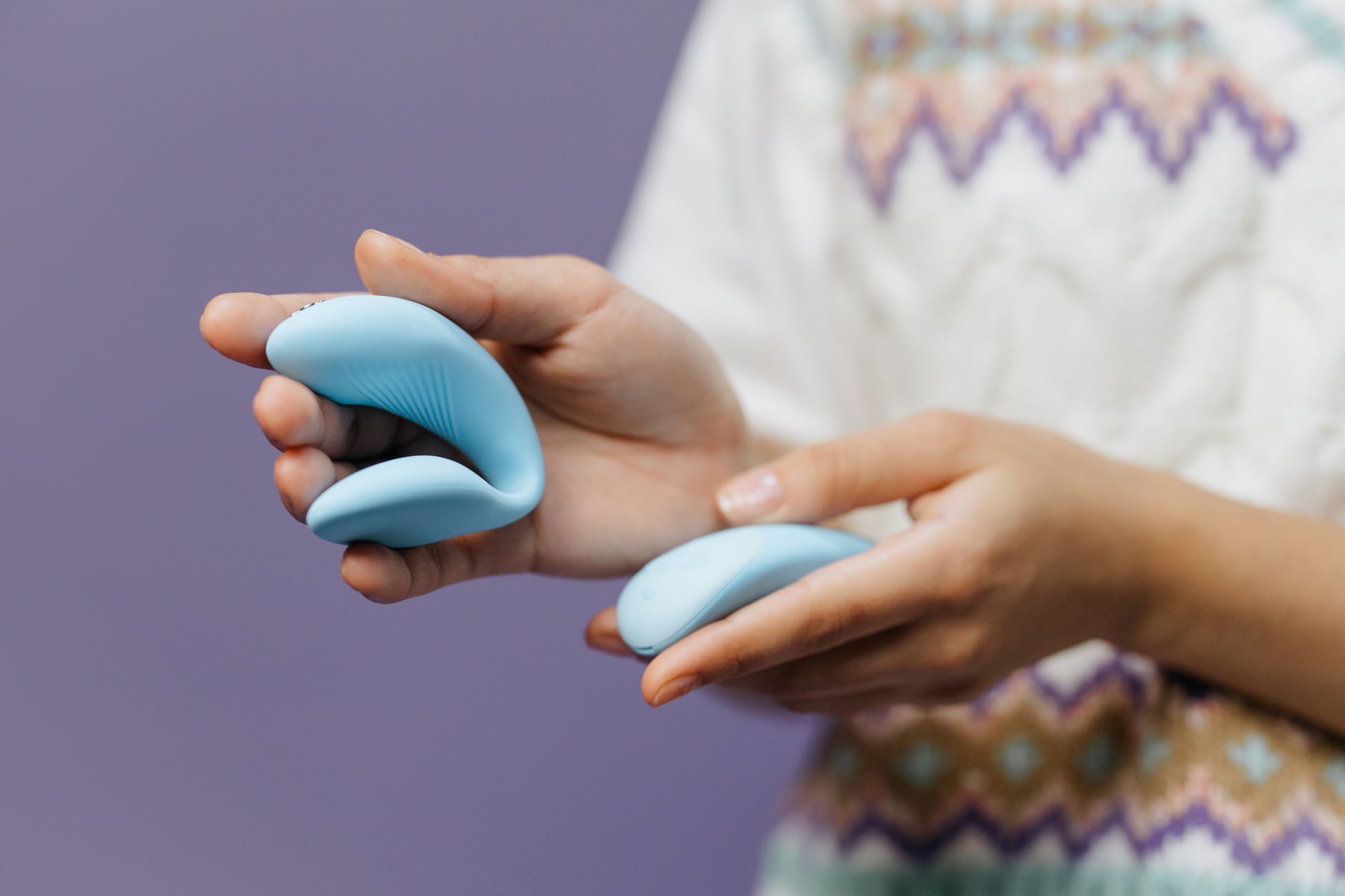
Here's what nobody tells you about pleasure mismatch
One of you loves the idea of a lemon vibrator because the suction feels direct and unapologetic. The other worries it'll be too much, too fast, too intense. So the vibrator sits in a drawer, unused, because neither of you wants to be the person asking for what feels good.
That's the real problem. Not incompatibility. Not bad intentions. Just two nervous systems wired differently, colliding over a device that could actually help both of you.
Why different pleasure preferences happen (and why they're normal)
People's sensitivities aren't just about anatomy. Stress levels, medication, how much sleep you got last night, whether you're in your head or present in your body—all of it shifts your capacity for intensity. Add in different attachment styles, past sexual experiences, and genuinely different neurological wiring, and you've got two humans who could have wildly different ideas of what feels good.
One partner might need that direct suction stimulation from a lemon vibrator to orgasm at all. The other might find it overwhelming unless they're already deeply aroused and fully present. Neither is wrong. Neither is broken. You're just operating in different sensitivity windows.
The good news: a lemon clitoral vibrator like the Lem actually gives you the control to meet each other halfway—because the patterns and intensity levels let you dial in exactly what works for each nervous system.
How a lemon vibrator actually bridges the gap
Unlike a standard vibrator with a single buzz, a lemon sucker works through pulsing patterns and variable intensity. This means the person who wants gentler stimulation can stay on pattern 1 or 2—which feels more like a gentle rhythm than aggressive buzzing. The person who craves intensity can layer in patterns 3-5, or combine the vibration with their own movement.
You're not choosing between your pleasure or theirs. You're both accessing your own version of what feels right.
More importantly: the suction design of a lemon vibrator means even at higher settings, it's distributing stimulation across the whole clitoral complex, not just point-focused pressure. That's genuinely different neurologically. Some people describe it as "pressure without rawness." Others say it feels less like friction and more like a full-body sensation.
When you understand how the device actually works, you can stop framing it as "intense" or "gentle" and start framing it as "mine" and "theirs."
The conversation you actually need to have
Honestly though, the lemon vibrator isn't the real conversation. The device is just the visible problem. The actual friction is: "I want to use something that feels amazing to me, but I'm worried it'll feel bad to you."
Start there. Not with the vibrator. With that worry.
When you're not actively intimate, ask your partner: "If I wanted to try something that feels really good to me, how would you want to be involved?" Some partners want to watch and see what turns you on. Some want to be the one controlling it. Some want to use it on you as foreplay. Some prefer to stay out of it entirely and join you after you've gotten where you need to be.
There's no "right" answer. But there's a huge difference between your partner tolerating a lemon vibrator and actively choosing how they want to participate in it.
Practical settings for different sensitivities
If you're exploring this together and one of you is nervous, here's a simple framework:
For the partner who needs gentler stimulation: Start on pattern 1 or 2 before any other touch happens. Let them sit with just the suction alone for a minute. This isn't foreplay yet. It's your nervous system getting familiar with the sensation. Once that feels normal, layer in manual touch from a partner. The combination of gentle vibration plus human touch usually feels less intense than the vibrator alone.
For the partner who craves intensity: You might not need an extended warm-up, but you do need permission to go there. Sometimes the hesitation isn't about the device. It's about feeling selfish or like you're pushing your partner out of the experience. If your partner knows you're using the Lem solo, or that you love it at patterns 3-5, that knowledge can be weirdly hot to them. You don't have to perform restraint.
For partnered use: Start at the same lower pattern (1-2) and increase together. If one of you wants to stop or dial down, that's the signal to return to a gentler pattern. This isn't about compromising down to boring. It's about finding the intensity window where you're both actually present.
Take your time here. Seriously. A lemon vibrator isn't going anywhere.
The jealousy thing (and what's actually happening)
Sometimes a partner gets uncomfortable when you use a lemon vibrator or any clitoral vibrator, and it looks like jealousy. "You don't need that with me." Or: "I should be enough."
Here's the reframe: different doesn't mean you're replacing them. It means you're filling a need their body can't access in that moment. Your hands do one thing. A lemon clitoral vibrator does another. Your partner's touch does a third.
You don't stop using your hands because they're "not enough." You also don't stop using a lemon vibrator because a partner is present. They're different tools for the same goal: your pleasure.
The insecurity underneath the jealousy is usually: "Will you still want me?" Not: "Will you still want the vibrator?" That's the conversation to actually have.
One of my clients told her partner: "When I use the Lem, I'm not replacing you. I'm showing you what lights me up. And I want you to know that." That shifted everything. He went from feeling excluded to feeling like he was finally seeing her.
When to use it solo, when to use it together
There's no rule here. But I'd suggest: start solo. Get familiar with what patterns feel good to you, how long it takes to build pleasure, what your own body's response is. That knowledge is your foundation.
Then bring it into partnered time if you both want to. Some couples love it as foreplay. Some use it together as part of partnered exploration. Some do it entirely solo and that's fine.
The key: you're not using a lemon vibrator to solve a relationship problem. You're using it because it feels good to you. The relationship benefit is that you know yourself better. That clarity is actually the bridge.
Talking about intensity without blame
Honestly, most sensitivity mismatches dissolve the second you both stop making it mean something about your relationship. "You like it too intense" feels like criticism. "I know my body usually needs a gentler rhythm to stay present" feels like information.
Language matters here. Instead of "That's too much for me," try "I'm most present when we start slow and build." Instead of "You're not sensitive enough," try "I light up when I feel that direct intensity."
You're describing your nervous system, not evaluating your partner's.
When you frame preferences as information instead of judgment, the lemon vibrator stops being a flashpoint. It becomes a tool you're both curious about. And that curiosity is where pleasure actually lives.
The real intimacy move
Here's what I've noticed after years of talking to couples: the most connected couples aren't the ones with perfectly matched desires. They're the ones willing to say "I don't fully understand what you need, but I want to learn."
A lemon clitoral vibrator gives you a concrete way to do that. You can watch what patterns your partner gravitates toward. You can ask what the suction feels like compared to your fingers. You can try it together and notice what shifts in the room.
That's intimacy. Not sameness. Curiosity.
FAQ
Why does my partner resist when I bring up using a lemon vibrator?
Most resistance isn't really about the vibrator. It's anxiety underneath: "Am I not enough?" "Does this mean something's wrong?" "Will you stop wanting me?" Those are worth addressing directly, separate from the device itself. Reassure your partner that a lemon vibrator is an addition to your pleasure together, not a replacement for them. Sometimes showing them it's not some intense industrial tool, but rather a thoughtfully designed suction stimulator, helps demystify it.
Can we use a lemon vibrator if we have really different sensitivity levels?
Absolutely. That's actually one of its biggest strengths. The variable patterns mean the person with lower sensitivity can use higher settings without overwhelming the more sensitive partner. You're not choosing one intensity level for both of you. You're each choosing what your nervous system needs.
What if my partner thinks I like it too much?
That phrasing usually masks insecurity rather than genuine concern. If your pleasure feels threatening to your partner, that's a relationship dynamic worth exploring with a therapist, not something to suppress by avoiding your own pleasure. You deserve to feel good. Your partner deserves to feel secure. Those two things can coexist.
How do I suggest using a lemon vibrator without making my partner feel judged for their sensitivity?
Lead with your own desire, not their limitation. "I've been curious about trying this because it sounds like it might feel amazing to me" lands differently than "You don't get me there enough." Frame it as exploration you want for yourself, not a fix for a problem in your partnership.
Can we use a lemon clitoral vibrator together if we have different preferences about pressure and speed?
Yes. Start at a lower intensity that feels good to both of you—usually patterns 1-2 work well for this. Then you can each tell the other what you like as you explore it together. Some couples take turns holding the lemon vibrator and experimenting. Others use it as part of foreplay. The device doesn't dictate how you use it. Your desires do.
What if one of us feels left out when the other person is really into it?
That's a sign you might benefit from exploring it together first, even if you have different sensitivity levels. Watch your partner's face. Notice what makes them go quiet or gasp. That's information. Then talk about what you each felt. Some partners find it genuinely hot to watch someone they love discover something that feels incredible. That's not left out. That's present.
The bigger picture
When you stop fighting your differences and start getting curious about them, that's when pleasure actually opens up for both of you. A lemon vibrator is just the tool that makes that possible. The real work is the conversation. The willingness to say "I want to understand what feels good to you." And then actually listening.
That's what closes the gap between different pleasure preferences. Not compromise. Genuine interest in each other's bodies and what lights them up.