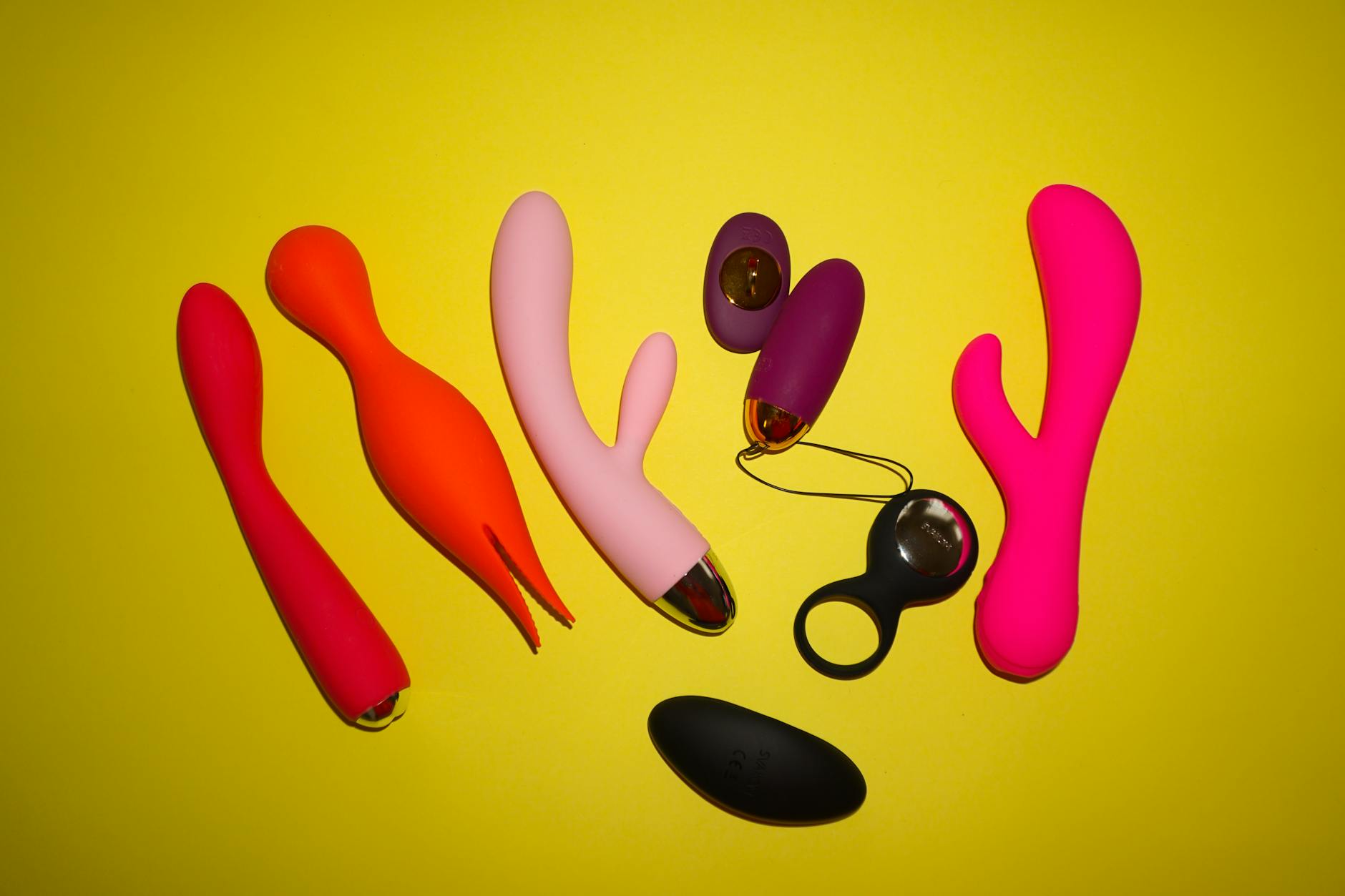
Let's start with the thing nobody says out loud
Mismatched desire is one of the most common friction points in long-term relationships, and it's also one of the loneliest things to experience. You're not broken. Your partner isn't broken. You're just operating on different frequencies, which feels like a personal rejection even though it almost never is.
Here's the harder part: using toys to solve this feels risky. What if introducing a lemon vibrator makes them feel like I'm replacing them? What if they think I'm just trying to shut them down? What if it makes things worse?
It won't. Not if you approach it as a tool for connection instead of a workaround.
Why desire mismatch is so common (and so invisible)
Research consistently shows that about 70% of long-term couples experience periods of mismatched libido. But here's what makes it different from other relationship challenges: everyone pretends it's not happening. You don't get dinner-table conversations about it. You get silence, resentment, and one partner feeling constantly rejected while the other feels constantly pressured.
The mismatch rarely comes from one person not loving the other. It comes from different stress loads, different hormonal cycles, different nervous system states, medication side effects, work pressure, parenting fatigue, or sometimes just plain biological variation. One of you might naturally run on a 48-hour cycle; the other on a once-a-week baseline. Neither is wrong.
When this gap widens, though, it creates a specific kind of pain: the higher-desire partner starts to feel unwanted, and the lower-desire partner starts to feel pressured and resentful. Sex stops feeling like play and starts feeling like homework. This is where most couples get stuck.
What a clitoral vibrator actually changes
A lemon vibrator like the Lem is not a replacement for partnered sex. Think of it as an intensity transformer. Here's why it matters specifically when desire mismatches:
For the partner with lower desire: A vibrator can make sex feel faster and more reliable. When you're already feeling pressured, the last thing you want is a long buildup that may or may not lead anywhere. The Lem's suction stimulation reaches the clitoral complex more efficiently than fingers or penetration alone, which means you get to the finish line without the extended time commitment. This shifts the mental load from "I have to have sex for their sake" to "I can enjoy this and still move on with my day."
For the partner with higher desire: It reframes the entire interaction. Instead of pursuing and being rejected, you're co-creating pleasure together. You're not the problem; the friction is just a logistics issue, not a love issue. That distinction saves relationships.
For both of you: It interrupts the reject-pursue cycle that slowly erodes intimacy. You stop having to negotiate every single time, which means you can actually talk about what's underneath the mismatch instead of endlessly negotiating the frequency.
How to introduce this without it feeling like a bandaid
The conversation before you even buy anything matters more than the vibrator itself.
Start here: "I've noticed we've been out of sync on how often we want sex, and I don't want that gap to keep growing. I'm not happy with how we've been handling it, and I don't think you are either. Can we actually talk about what's going on for each of you without trying to fix it yet?"
That's it. You're not pitching a solution. You're naming the problem clearly.
Listen for what comes next. Maybe their lower desire is about feeling disconnected. Maybe it's about medication. Maybe it's about not wanting penetration but still wanting intimacy. Maybe the higher-desire partner is stressed and seeking reassurance. None of this gets solved by adding a toy, but all of it gets solved faster if you know what you're actually working with.
Once you understand the underlying piece, you can say something like: "I've been reading about ways to make sex feel better for both of us. One thing that comes up a lot is that vibrators help take the pressure off because there's less guesswork. Would you be open to trying something like that together?"
The key word is "together." You're not bringing this in as a solo solution. You're bringing it as a tool for shared pleasure.
The actual mechanics: how to use it together
Start small. The first time you use a lemon clitoral vibrator in a partnered context, don't build it into the main event. Use it during foreplay, or use it for solo pleasure while your partner watches. This sounds unsexy written down. It's actually incredibly intimate because you're letting them see what you enjoy, which is information that's wildly useful for both of you.
Once you're both comfortable, here's how it typically works: your partner can use the vibrator on you, which gives them something active to do while you get reliable stimulation. This flips the dynamic from "me pursuing, you resisting" to "us collaborating on your pleasure." The pressure literally transfers from you to the tool.
Start on the gentlest setting and work up. Talk as you go. "That's good" or "lower" or "hold that" helps your partner feel useful and keeps you in the feedback loop instead of disappearing into your own head.
Most importantly: this is not the entirety of sex. It's part of the ecosystem. Sometimes it leads to penetration. Sometimes you finish with the vibrator and then spend time together in other ways. Sometimes it becomes the main event. There's no wrong progression.
During this, the higher-desire partner often discovers something surprising: they enjoy partnered pleasure more when there's less ambiguity about whether it's going to happen. The lower-desire partner usually finds that sex feels less obligatory when they're not performing or trying to meet someone else's timeline.
The conversation underneath the mismatch
This is the part that actually matters long-term. Using a lemon vibrator can buy you space to have real conversations, but it doesn't replace them.
If the mismatch is rooted in one person feeling disconnected, you need to address the disconnection. If it's exhaustion, you might need to redistribute household labor or talk about scheduling sex at a time when everyone's actual energy is there. If it's a medication side effect, that's a conversation with a doctor. If it's just biological difference, you need to grieve the fantasy of always wanting sex at the same time and build a system that works for you both.
A clitoral vibrator is a tool that makes some of these conversations easier because it removes the layer of personal rejection. Once that layer is gone, you can actually hear each other.
When to talk to a therapist
If desire mismatch is paired with resentment that won't shift, or if one person is threatening to leave, or if you've tried talking and it keeps circling back to the same fight, a sex-positive therapist is worth the investment. Not because something is wrong with either of you, but because a trained third party can help you translate what you're each actually saying underneath the words.
Look for someone trained in the Gottman Method or Emotionally Focused Therapy, both of which have strong track records with desire discrepancy. This is fixable. Thousands of couples fix it every year. It just usually requires some actual work, not just a vibrator.
But the vibrator can absolutely be part of the toolkit. When you're using it as a conversation starter instead of a conversation ender, it often becomes the thing that opens up the real discussion. And that's when intimacy usually comes back.
FAQ: Desire mismatch and lemon vibrators
Will using a vibrator make my partner feel replaced?
Only if you frame it that way. If you bring in a lemon clitoral vibrator as "I don't need you anymore," yeah, that's going to sting. But if you frame it as "I want us to both feel good and right now we're stuck," it lands completely differently. Most partners actually feel relieved when the pressure lifts. And when they get to use it on you, they often feel more connected, not less.
What if my partner is the one who wants sex less and refuses a vibrator?
That's information. That tells you the resistance isn't actually about the vibrator. It might be about control, or discomfort with sexuality, or something specific to toys. That's a separate conversation that might benefit from a therapist. A clitoral vibrator is not a magic fix for someone who's emotionally resistant to pleasure or sex work.
How often should we be having sex if we're mismatched?
There's no magic number. Some thriving couples have sex twice a month. Others have it twice a week. The key is that both people feel respected and neither feels constantly pursuing or constantly fleeing. If you're meeting somewhere in the middle and both feel okay, you're doing fine. If one person is secretly resentful, that's the signal something needs to shift.
Can a lemon vibrator actually make sex faster?
Yes. The suction mechanism of tools like the Lem stimulates the clitoral complex more efficiently than manual stimulation alone, which typically shortens the time to orgasm. This isn't about rushing. It's about reliability and reducing the time you spend in anticipation or negotiation. That actually helps people relax and enjoy themselves more.
What if we use a vibrator and nothing changes?
Then the mismatch is rooted in something deeper that the vibrator can't address. That's when therapy becomes the actual tool. A vibrator can interrupt the cycle and create space for conversation, but it can't resolve fundamentally broken communication or incompatibility on what intimacy means. Those are couple issues, not vibrator issues.
Is it normal to feel weird about your partner using a vibrator on you?
Yes. Lots of people feel awkward the first time. Most of that awkwardness disappears within the first two or three times because your nervous system realizes nothing bad is happening. You're just getting more direct stimulation. If the awkwardness doesn't fade and stays rooted in shame or discomfort with pleasure, that's worth exploring with a therapist.
The bigger picture
Desire mismatch is not a sign your relationship is failing. It's actually incredibly common in the middle and later chapters of long-term partnerships. The couples who navigate it successfully are the ones who stop treating it as a personal failure and start treating it as a logistical problem to solve together.
A lemon clitoral vibrator can be part of that solution. It takes pressure off, creates space for conversation, and helps both of you reconnect with pleasure instead of just performing obligation. But the real work is in the conversation underneath. The vibrator is just the opening sentence.
If you're navigating this, you're not broken. Your relationship is not broken. You're just out of sync on one particular thing, and that's absolutely fixable. Start with the talk. The vibrator is optional. The commitment to actually hearing each other is mandatory.
Want help thinking through how to navigate this in your specific situation? Reach out anytime.
Sources
Gottman, J. M., & Silver, N. (1999). The Seven Principles for Making Marriage Work. Crown.
Johnson, S. M. (2019). Attachment Theory in Practice: Emotionally Focused Therapy (EFT) with Individuals, Couples, and Families. Guilford Press.
Basson, R. (2001). Human sex-response cycles. The Journal of Sexual & Marital Therapy, 27(1), 33-43.