Here's what happens when pleasure becomes the third rail
One person wants to talk about what actually feels good. The other person changes the subject, goes quiet, or makes a joke that lands flat. Sex happens, but not the conversation about sex. Months pass. Nothing shifts. You start assuming they don't care, or worse, that they're not interested in you that way.
They might be interested. They might just be terrified of the conversation.
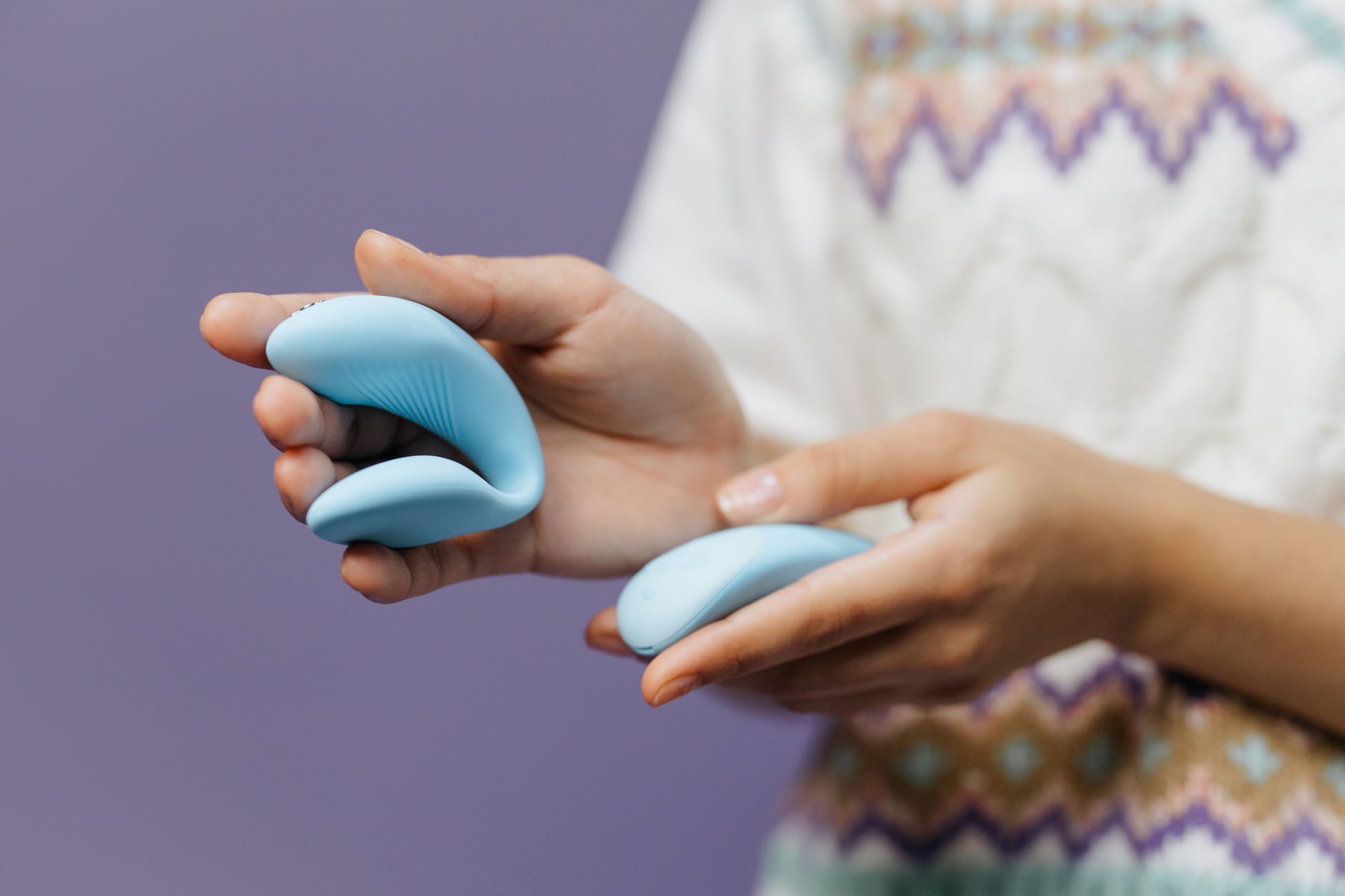
That's where a lemon clitoral vibrator comes in. Not as a replacement for talking, but as a bridge to it. A tool that says "I want to explore this with you" without requiring anyone to find perfect words first.
Why partners avoid pleasure conversations
It's rarely about lack of interest. In my practice, the avoidance usually comes from one of three places.
First, shame. Maybe they grew up hearing that pleasure was selfish, or that wanting it meant something was wrong with them. Talking about it directly feels like admitting something broken about themselves.
Second, fear of inadequacy. If they ask what you want, the answer might be "not what you're doing." That's a lot of ego to risk, especially in a long-term relationship where you've both had years to assume things are fine.
Third, genuine discomfort with the mechanics of the conversation itself. They don't know the words. They don't know how to begin. They can't imagine how to bring it up without it feeling clinical or accusatory.
A lemon vibrator sidesteps all three problems at once.
How a lemon vibrator becomes the opening move
Introduce it as exploration, not correction. "I found this and I'm curious about it" lands completely differently than "I need more pleasure in our sex life." One is exploratory. The other feels like a critique.
When you bring home a lemon clitoral vibrator, you're giving your partner permission to be curious too. You're saying "this doesn't have to be weird" by acting like it isn't.
The next move matters. Use it alone first. Let them see you comfortable with it, unfazed, matter-of-fact. Don't perform pleasure or make it a show. That creates pressure. Just integrate it naturally into your routine. "I'm going to take some time for myself" becomes a normal thing you say.
Then, at some point in casual conversation (not during sex, not right before, but over coffee or while cooking), mention what you discovered. "That lemon vibrator actually works really differently than I expected. It's a lot gentler." You're creating information without creating obligation.
They might ask what you mean. They might say nothing. Either way, you've opened a door that doesn't require them to perform anything or prove anything.
The three ways your partner might respond
Some partners will ask if they can watch. This is huge, because it means they're ready to be involved in your pleasure, which is the real goal. A lemon vibrator is non-threatening enough that they can observe without feeling like they're being asked to perform. Let them watch. No narration needed. Just be yourself.
Other partners will ask if they can try it on you. Even better. This is them saying "I want to touch you differently" without saying those words. Let this happen. Coaching is minimal ("maybe a little softer pressure" or "stay there for a second") but mostly just receive it. You're rebuilding their confidence that they can give you pleasure.
Some will say nothing for a while, then months later ask about it in a roundabout way. ("That thing you got, is it... good?" / "Does it feel different?") Treat these as serious questions, because they are. Your partner is checking whether it's safe to be curious.
What happens when they're still stuck
If weeks pass and there's no movement, the vibrator has still done its job. You've introduced pleasure into the environment without shame. You've shown you're comfortable with your own body. You've made it normal.
Now the actual conversation becomes possible. And you have something concrete to reference instead of abstract ideas. "Remember when I said the lemon vibrator feels different? That's because [light pressure / suction / rhythm] actually works better for my body than [whatever wasn't working]." You've translated pleasure into information.
This is where many couples get unstuck. Not through a big relationship talk, but through a small, specific observation that your partner can actually work with.
The things you can say when words get stuck
If your partner asks questions, here are the simplest answers that usually unlock conversation.
"Does it feel better than [my hands / during sex]?" Answer honestly: "Different. Not better or worse, just a different kind of stimulation." This removes the threat that you're saying they're inadequate.
"Why do you need that?" The honest version: "I don't need it. But I'm learning what my body actually responds to, and I want to share that with you." This reframes it as self-knowledge, not a complaint.
"Should I be using that on you instead?" Yes. The answer is yes. "I love when you touch me. I also like exploring on my own sometimes. Maybe we could try it together?" Now you're inviting collaboration instead of replacement.
The key across all of these is removing shame from the picture. You're not accusing them of failure. You're sharing information about yourself.
Why a lemon vibrator specifically works for this
Clitoral suction vibrators like the Lem have a built-in gentleness that makes them feel less aggressive than other toys. They're also smaller and less visually intense than wands, which means a partner is less likely to feel threatened by them.
But more than that, a lemon clitoral vibrator is recent enough in the market that it still carries an element of curiosity rather than shame. "I wanted to try this new thing" feels different from "I've been using vibrators for years and hiding them from you." The Lem is approachable. It's also made by Hello Nancy, which positions itself as friendly and evidence-based rather than explicitly sexual.
This matters psychologically. If your partner is already scared of pleasure conversations, you want a tool that doesn't scream "SEXUAL DEVICE" the moment they see it.
How to move from the vibrator to actual sex
Once your partner is comfortable watching or touching the vibrator, the sex conversation becomes easier because you've already solved the hardest part: you've made pleasure visible without drama.
From here, you can start asking for other things. "What would feel good for you?" becomes possible because they've already seen you ask for what feels good for you.
You can also use the vibrator during partnered sex if they're open to it. Some partners worry this means they're not enough. Reframe it: "I want you inside me and this sensation at the same time." You're adding, not replacing. You're saying "I want more of you, in a different configuration."
The conversation becomes normal once you've both seen that pleasure doesn't have to be shameful or scary. A lemon vibrator, used thoughtfully, is the Trojan horse for that realization.
What if they never come around
This is the uncomfortable part. A vibrator is a conversation starter, not a relationship fixer. If your partner is fundamentally unwilling to engage with pleasure, that's a separate issue that might benefit from couples therapy.
But in most cases, what looks like unwillingness is just fear that hasn't been managed yet. A lemon clitoral vibrator is small enough and approachable enough that it can help manage that fear. The rest is patience and consistency.
Your pleasure matters. Asking for what you want is not selfish. Using tools that help you explore your own body is not a threat to your relationship. If anything, it's the opposite. You're saying "I care enough about this to take it seriously."
Your partner might surprise you once they realize you mean it.
People also ask
Is using a vibrator during partnered sex okay if my partner is uncomfortable with it?
Comfort matters on both sides. Start with solo use and observation, not integration. Once they've seen you comfortable with it, the discomfort usually shifts. If it doesn't after months of exposure, that's a conversation worth having directly: "I want to use this sometimes, and I want you to be okay with it. What would help?" Some partners just need to understand why it doesn't threaten the relationship.
How do I bring up a lemon vibrator without my partner thinking I'm unhappy with them?
Timing and framing. Don't bring it up during or after sex, when it feels like a direct comparison. Bring it up casually when you're both calm: "I found this thing I want to try. It's about exploring, not about anything being wrong." You're the expert on your own body. Act like it.
What if my partner asks me to hide the vibrator?
That's worth exploring gently. Ask why. Is it shame about sex? About what it means if you're using it? Is it about judgment from others if they see it? Understanding the "why" helps you figure out whether this is a temporary discomfort that softens over time or a deeper incompatibility that needs professional help.
Can a lemon clitoral vibrator help if we've stopped having sex entirely?
It can be part of the solution, not the whole solution. If sex has completely stopped, the vibrator alone won't fix it. But it can restart curiosity, which is the first step. Sometimes seeing your partner engaged with their own pleasure makes them want to engage again. It's not magic, but it's a starting point.
Should I use the lemon vibrator to orgasm before partnered sex?
It depends on your body and what you want from sex. Some people find that solo pleasure beforehand makes partnered sex more relaxed and enjoyable. Others prefer building arousal together. Experiment and notice what actually feels good. Your partner is more likely to join in once you stop asking permission to know your own body.
How long before my partner is comfortable with this?
It varies wildly. Some partners come around in weeks. Others take months. The key is consistency without pressure. Keep using it. Keep acting like it's normal. Keep inviting them in small ways. Eventually, the unfamiliarity wears off and curiosity often takes over. If nothing shifts after six months of gentle invitation, that's when you might need couples support.