Here's the thing about arousal slowdown
It happens. Your body used to respond in five minutes flat. Now it's fifteen, or twenty, or sometimes you're wondering if anything's happening at all. The instinct is to panic or assume something's wrong. Neither is helpful.
Arousal slowdown is one of the most common shifts I see in my practice, and it's almost never a sign of broken desire. It's usually a sign that something in your life has changed. Stress. Sleep debt. A medication. A shift in how you're relating to your partner. Age. Recovery from illness. Sometimes it's just that you've been going through the same routine for three years and your nervous system has gotten bored.
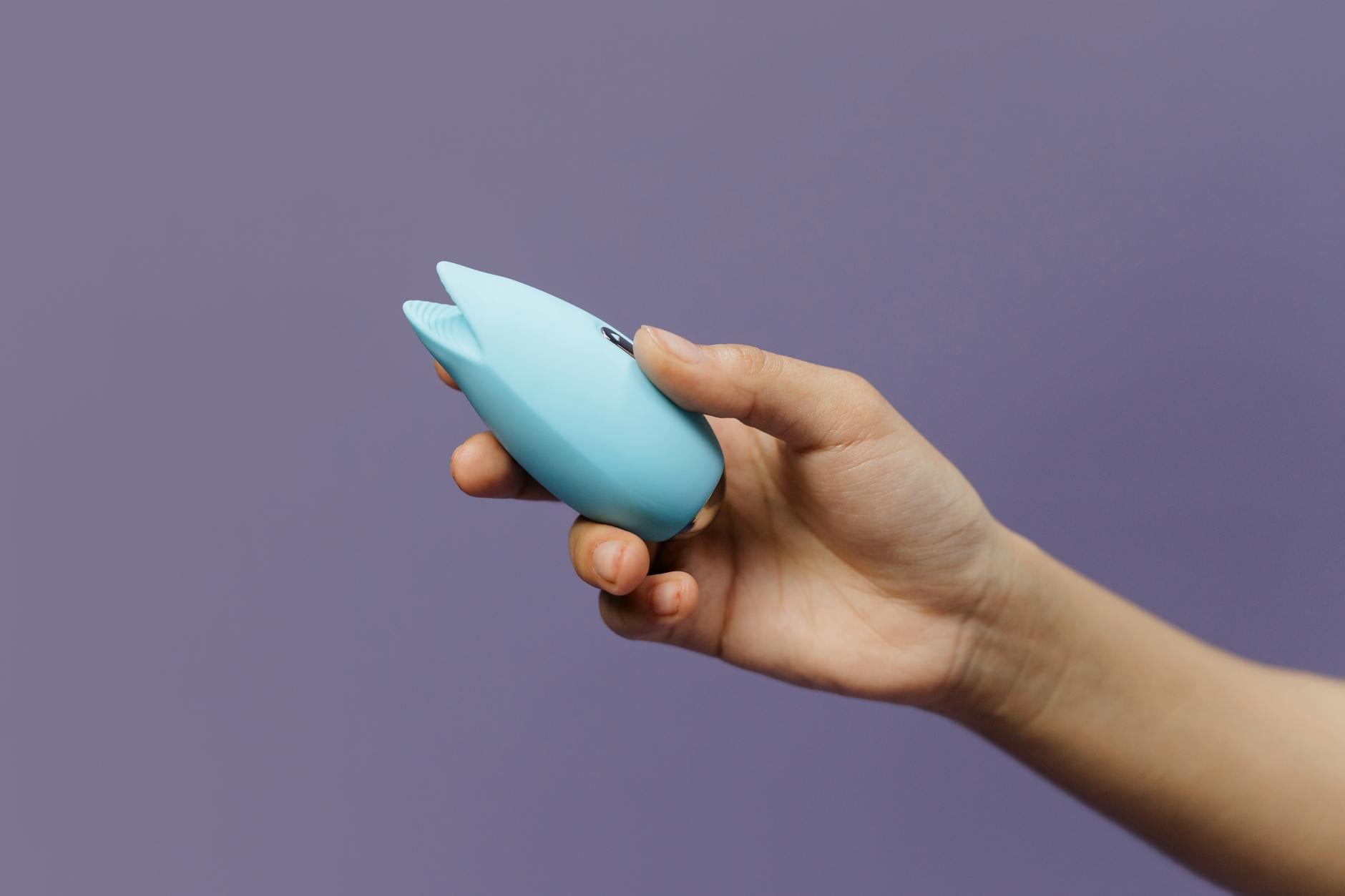
The good news: it's not permanent, and it's not something you have to white-knuckle through. A lemon clitoral vibrator like the Lem is actually a precision tool for this exact problem.
Why arousal takes longer now
Let me separate the physiological from the psychological, because they're operating at the same time and most people conflate them.
Physically: arousal requires blood flow to concentrate in your genitals, your clitoris to swell, lubrication to build, and your nervous system to shift from fight-or-flight into rest-and-digest mode. All of that takes time. Stress, poor sleep, or changes in hormones slow the chain reaction down. Medications like SSRIs, beta-blockers, and some antihistamines literally reduce genital blood flow. That's not your fault and it's not your imagination.
Psychologically: you're thinking. You're running through your to-do list. You're self-monitoring ("Is this working? Am I taking too long?"). You're anxious because arousal is taking longer, which creates a feedback loop that makes it take even longer. Your nervous system is partially still at work, still parenting, still in threat-detection mode.
Both matter. But here's what's useful to know: a tool like a lemon vibrator can short-circuit the physical delay. If your body doesn't feel arousal building on its own timeline, external stimulation that precise and targeted can jumpstart the process. That's not cheating. That's not settling. That's using the right tool for the job.
The warm-up window nobody talks about
Most advice says "start with foreplay." That's too vague to be useful. Here's what actually helps:
Thirty minutes before you plan to have sex or pleasure yourself, shift your nervous system. Not thirty minutes of being touched. Thirty minutes of stepping out of productivity mode. A bath. A walk. Music. Something that signals to your body that it's off duty. This matters more than you think. If you go straight from email into sex, your sympathetic nervous system (the alert part) is still partially running. Arousal can't build properly.
Then, when you're actually ready to engage, budget fifteen to twenty-five minutes of low-intensity contact. Not waiting for arousal to show up on its own. Actively creating the conditions. Touch your partner. Be touched. Use a lemon vibrator on the lowest settings. The goal isn't orgasm yet. The goal is giving your body permission to shift into arousal mode without pressure.
This is where most people get it wrong. They try to go from zero to intense stimulation because they're impatient or because they think "doing more" will speed things up. It won't. A body that's halfway into arousal responds better to gentler stimulation than a body that's still skeptical. Start with the Lem on setting one or two. Let your body build from there.
Using a lemon vibrator in the warm-up phase
The Lem and similar lemon clitoral vibrators are exceptional for slow-build arousal because of their design. They use suction and gentle pulsing rather than direct high-frequency vibration. That means you can stay in the lower settings for longer without needing to escalate.
The protocol I recommend:
Start on setting one. Spend five minutes there. You're not trying to feel pleasure yet. You're teaching your body "we're doing this now." Then move to setting two. Another five minutes. Then three. By the time you get to settings four or five, your body's had fifteen minutes to build arousal gradually. Most people find that at this point, sensation feels completely different than it would have at minute two.
If you're using the Lem with a partner, this is also the time to be explicit about what you need. "I'm going to start here. I might need fifteen minutes. That's not a problem, it's just what my body needs." A partner who loves you will find that information useful, not disappointing.
If you're alone, use this time to tune into what you actually want. Not what you think you should want. Not what worked last week. What your body is asking for right now.
The role of context and mental load
I mentioned earlier that arousal slowdown is often not just physiological. Let me be specific about that.
If you're carrying invisible labor, that's in your nervous system. If you're resentful about something your partner did, that's in your nervous system. If you're worried about money or your health or whether you locked the door, that's taking up bandwidth that arousal needs. A lemon vibrator can't think those things away for you.
What it can do is give you a clear, simple task to focus on. The sensation becomes your anchor point instead of the spiraling thoughts. Many people find that once arousal actually starts building, the mental clutter settles on its own.
But if the mental stuff is chronic, a vibrator is a band-aid, not a solution. Sometimes the work is partnership work. Sometimes it's therapy work. Sometimes it's just acknowledging that you need to sleep more or delegate something or have a hard conversation.
When to suspect something beyond slowdown
There's a difference between arousal that's slow but responsive and arousal that's completely absent. If you're using the lemon clitoral vibrator on all settings and feeling nothing, or if arousal is absent across the board even when circumstances are ideal, that's worth mentioning to a doctor or therapist.
Mediation side effects, untreated depression, hormonal imbalances, and relationship problems can all create arousal that's not just slow but missing. A vibrator won't fix those. But a conversation with someone qualified to help will.
The unexpected benefit of slow arousal
Here's something I notice: people who work with their body's slower arousal timeline often end up enjoying sex more, not less. When you're not rushing, when you're actually paying attention to sensation instead of mentally checking boxes, pleasure becomes something you experience rather than something you perform.
A lemon vibrator in this context becomes a permission structure. "I'm allowed to take time. My body gets to set the pace. We're working with what I actually need, not what I think I should need."
That shift alone often transforms the experience.
FAQ: Arousal and the lemon vibrator
Why does my body take so long to get aroused now?
Arousal speed depends on stress, sleep, hormones, medications, how you're feeling about your partner, whether your nervous system is still partially in work mode, and sometimes just random variation. Your body isn't broken. It's responding to conditions. Change the conditions and arousal often speeds up.
Does using a vibrator mean I can't get aroused on my own?
No. A vibrator is a tool, not a crutch. Many people use the Lem to help build arousal during a warm-up phase, then transition to partnered touch or other stimulation. The vibrator is often most useful at the beginning, when your body needs help transitioning into arousal mode. Once you're there, sensation feels different and you may want to shift to something else.
Should I use the lemon vibrator the entire time or just at the beginning?
That's your call. Some people use it for the first ten to fifteen minutes, then put it aside. Others keep it in the rotation the whole time. There's no rule. The point is giving your body multiple types of sensation so arousal can build along the path your body prefers.
Can my partner help with arousal slowdown?
Completely. The most useful thing a partner can do is understand that arousal slowdown isn't rejection and isn't your fault. Then they can help create the conditions. Low lighting. Time. Removing other distractions. Using the lemon vibrator together if that appeals to you. The conversation about what you need is often more important than the specific technique.
What if the Lem isn't enough?
If the Lem helps but you're still not getting to arousal, or if arousal is completely absent, that's a conversation for a doctor or therapist. Medications, hormones, relationship dynamics, and sometimes deeper stuff like anxiety or trauma can all interfere with arousal in ways a vibrator can't address. That's not a failure. It's information.
How long should I spend in the warm-up phase?
For most people, fifteen to twenty-five minutes of low-intensity stimulation with a lemon vibrator is enough to signal to your body that arousal is building. Some people need a little less, some need a little more. Pay attention to what happens around the fifteen-minute mark. That's usually when you'll feel a shift in sensation and where your body starts responding faster to stimulation.
What to do next
If arousal slowdown is happening for you, start here: give yourself actual time. Don't try to squeeze sex into the gaps between other things. Create a window where you're genuinely off duty. Then use a lemon vibrator starting on the lowest setting and let your body build from there. Most people notice a difference in how responsive they are within a few tries.
If nothing's changing after a couple weeks, or if this is brand new and severe, check in with a doctor. Arousal slowdown is usually manageable. But sometimes it's pointing to something that needs real help.
Your body's pace is your body's pace. Work with it, not against it. That's when pleasure actually shows up.