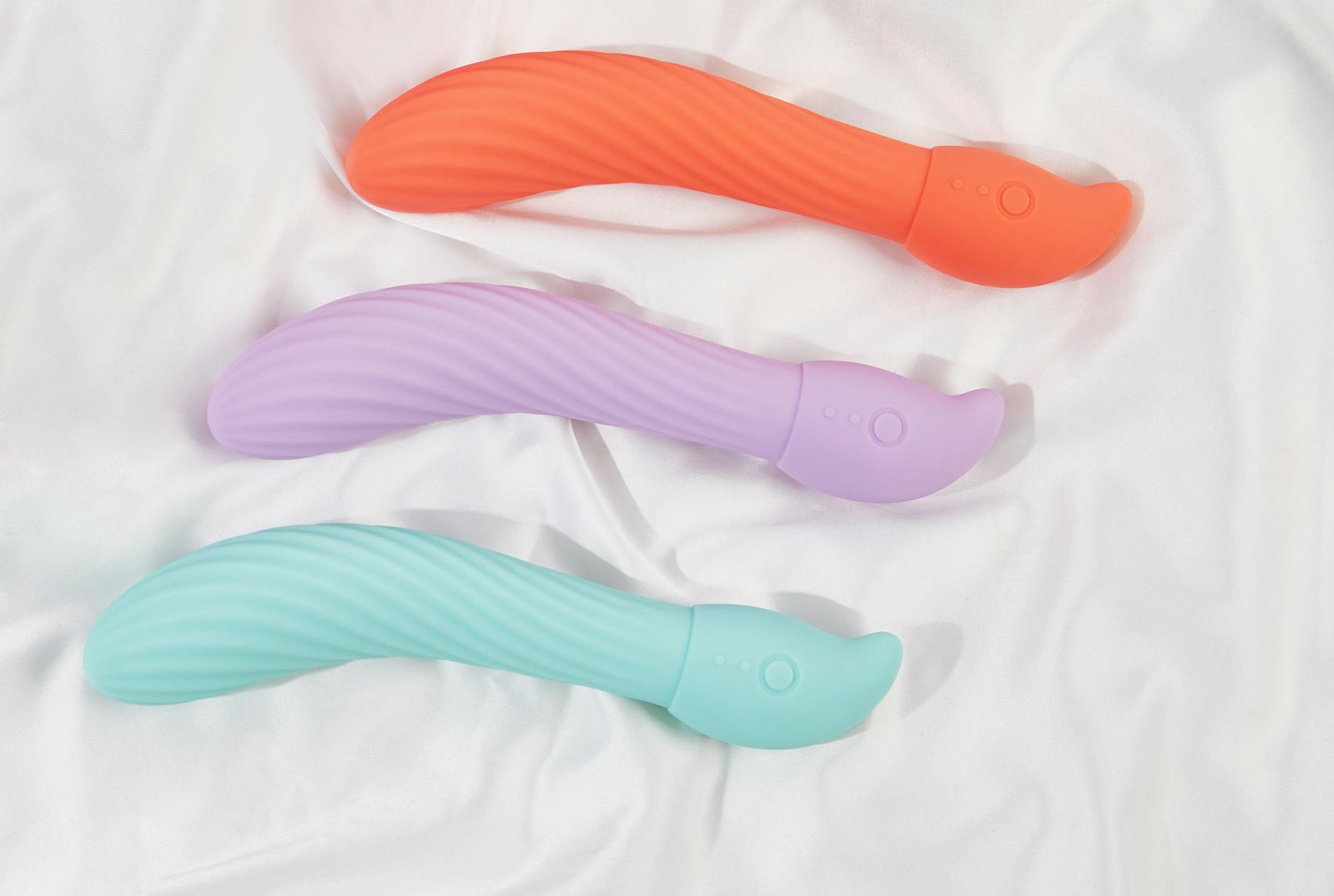
How to Use a Lemon Vibrator During Different Phases of Your Cycle
Your body shifts every seven to ten days. Here's how to sync your clitoral vibrator technique, pressure, and patterns with your actual hormones for better sensation and faster results.
Honestly, most people who menstruate have never connected the dots between what day of their cycle it is and how their body actually responds to touch. You know your mood shifts. Your energy shifts. Your skin changes. But your pleasure? That shifts too, and it's not random.
Your sensitivity, arousal speed, and orgasm intensity follow a fairly predictable pattern across your cycle. That means your lemon vibrator technique shouldn't stay static either. Adjusting your intensity, patterns, and timing based on where you are hormonally is the difference between good sensation and mind-blowing results.
Let me walk you through what actually happens at each phase, and how to use your lemon clitoral vibrator to work with your body instead of against it.
This is counterintuitive, but here's the thing. During menstruation, your clitoris swells slightly from increased blood flow. That sounds like it would feel better, right? Sometimes it does. But your nerve sensitivity is actually lower during this phase because your estrogen levels dip.
What that means practically: your lemon vibrator can go harder without feeling uncomfortable. Your pain threshold goes up. You're less likely to overstimulate or feel rawness after.
If you typically use your Lem on patterns 3-5, you might comfortably jump to 5-7 during your period. The suction intensity that might feel intense on day 14 of your cycle feels just right on day 3. Some people find their best, deepest orgasms happen in the first two days of menstruation.
One caveat: if you have heavy cramping, lower abdominal tension can block sensation. Heating pads, gentle stretching, or a warm bath first helps more than forcing it. Listen to your body.
After your period ends, estrogen starts climbing. This is roughly days 5-13 of your cycle, but everyone's timeline shifts. You'll know you're in the follicular phase because your energy goes up, your mood lifts, and your skin clears a bit.
Your clitoris becomes more sensitive. You warm up faster. You might orgasm more easily, and sometimes more intensely. This is when you want to dial back your lemon vibrator intensity slightly from where you were during menstruation and focus instead on pattern variation.
Try starting lower (patterns 1-3) and building up slowly. Your arousal is climbing on its own, so let it. The buildup is part of the pleasure. This is an excellent phase to explore different patterns on your Lem and notice what your body responds to most. You'll have better feedback.
Many people find that during the follicular phase, they enjoy longer sessions. Sensitivity is rising, but it's not yet at peak, so you have more room to explore without overstimulation. Budget 20-30 minutes if you can.
This is the sweet spot. Ovulation usually hits around day 14, give or take. Your estrogen surges, then testosterone spikes on top of that. You have more blood flow to your genitals. Your clitoris is fully engorged. Your whole pelvic floor is more responsive.
You're also probably most interested in sex, most confident, and most aroused overall. This is the phase where orgasms often feel strongest and come fastest.
Here's what that means for your lemon clitoral vibrator use: you need less time to warm up, but you might want less intensity than you'd think. The peak sensitivity can tip into overstimulation territory if you're not careful. If you usually use patterns 4-6, you might find that patterns 3-5 actually feel better during ovulation because the sensitivity is doing half the work already.
Try shorter, more intentional sessions during this phase. Five to fifteen minutes might be plenty. This is also when some people find that switching between patterns or taking brief pauses feels better than continuous stimulation. Your body is primed and reactive.
After ovulation, you enter the luteal phase. Days 15-28 (roughly). Progesterone rises, and estrogen and testosterone both drop. Your energy crashes compared to the follicular phase. You might feel moodier, more introspective, more tired.
Your clitoral sensitivity actually decreases during this phase. You become less easily aroused. Your orgasms might feel less intense. This frustrates a lot of people, but it's not a problem to fix. It's just a biological fact.
During the luteal phase, your lemon vibrator should go stronger, not softer. You need more intensity to reach the same sensation you felt at ovulation. This is when moving back up to patterns 5-8 on your Lem makes sense. You're not broken. Your tissues just need more stimulation to fire up the same way.
You'll also probably need longer warm-up time. Budget 20-30 minutes instead of 10. This phase rewards patience and consistency more than novelty. Stick with what works rather than experimenting.
Some people find that the deeper, more sustained sensation of the luteal phase feels emotionally different. Less intense doesn't mean less meaningful. Many report that luteal-phase orgasms feel more full-body and grounding, even if the peak isn't as sharp.
Here's the honest part: everyone's cycle is different. You might peak at ovulation like textbooks say. You might peak during menstruation instead. Your cycle might be 26 days or 35 days. The patterns I'm describing are the average, not the rule.
The best thing you can do is track it yourself for two or three months. Note the day of your cycle (day 1 is the first day of bleeding). Note which pattern and intensity on your lemon vibrator felt best. Note how long you needed. Note whether you orgasmed and how it felt.
After a few cycles, patterns will emerge. Maybe you discover that you actually prefer lower intensity during ovulation, not higher. Maybe your follicular phase and luteal phase feel identical. Maybe you have a surprise peak on day 20. Your body is giving you information every single month.
This isn't just about pleasure, by the way. It's about knowing yourself. People who understand their cycle report feeling more in control, more confident, and more able to communicate what they need with partners.
If you share a bed with someone, cycle syncing your pleasure isn't about making them adjust to you. It's about you knowing what you want and being able to say it clearly. When you're in your luteal phase and need more intensity or time, you can ask for that. When you're ovulating and faster is better, you can set that expectation.
As I wrote in my piece on mismatched desire during the cycle, knowing your own rhythm is the foundation. Everything else builds from there.
Your lemon vibrator (whether you're using a Lem or another clitoral suction device) probably has 8-10 different patterns. You don't need to memorize all of them. Focus on three: a light, slow pattern for building arousal. A medium rhythm for the main event. A faster or more intense pattern for the final push.
During your follicular and ovulation phases, the light pattern might be enough. During menstruation and luteal, you might skip it and start at medium or jump straight to fast.
The rest of the patterns are there for experimentation and variety. Save that for when you have the mental and physical bandwidth to notice the difference, which is usually the follicular and ovulation phases when your overall energy is higher anyway.
If you're on the pill, patch, or ring, your hormone levels stay relatively flat. That means your sensitivity probably doesn't swing as dramatically month to month. That's useful information. You might find that you have a consistent preferred intensity and pattern year-round, which simplifies things.
If your cycle is irregular or you skip periods, the framework still applies. Notice the patterns within whatever cycle you do have. Even if it's six weeks instead of four, your body still follows a hormonal curve. You can still sync your lemon vibrator technique to it.
For more on how hormonal birth control changes sensation altogether, check out that article.
Your cycle isn't just about when to use your vibrator harder or softer. It's also about when rest and recovery matter more. During the luteal phase, when energy is lower and sensitivity is lower, taking a few days off completely is actually fine. Your body might appreciate it.
Some people find that mid-cycle (a few days after ovulation) is a good rest day too. Not because anything is wrong, but because you can. The follicular phase is usually when consistent use feels best.
Listen to that. Pleasure isn't always about maximum stimulation. Sometimes it's about noticing what your body is telling you and honoring that.
Notice the patterns within whatever cycle you do have. Even irregular cycles follow some hormonal rhythm. Track for two or three months and the pattern becomes visible. Once you see it, you can start adjusting your lemon vibrator use accordingly. If your cycle is truly chaotic or you're dealing with hormonal conditions, a reproductive endocrinologist or hormone specialist can help you understand what's driving the irregularity.
Yes, absolutely. Using your vibrator daily is fine. What this framework does is help you get better sensation and faster results by matching your technique to where you are hormonally. You can ignore the cycle entirely if you prefer. But most people find that tuning in makes the experience better.
If you don't menstruate for medical, hormonal, or other reasons, the hormonal swings this article describes don't apply to you. But the principle still does: bodies have rhythms and variations in sensitivity. You might notice weekly patterns, seasonal patterns, or patterns tied to stress and sleep. The framework is the same. Pay attention to your own rhythm and adjust accordingly.
The follicular phase and ovulation are typically easier to work with as a beginner because sensitivity is higher and arousal comes faster. You'll get quicker feedback from your body. That said, any phase works if you're patient and willing to adjust intensity. If you're new to lemon vibrators entirely, start during your most confident, most aroused phase, whatever that is for you.
Hormones. Estrogen and progesterone change your nerve sensitivity, blood flow, tissue thickness, and arousal speed. They also affect your mood and confidence, which influences how much pleasure you can access. It's not psychological. It's biological. And it's completely normal.
If you have a partner and you're sharing pleasure time, yes. Not as a complex system to memorize, but as useful information. Something like: "I actually prefer more intensity during my period and the week after" or "Right around ovulation I warm up super fast and don't need as much buildup." That's useful data that helps both of you.
Your pleasure matters. Knowing your own rhythm and being able to communicate it is how you get what you actually want.