Let's be real about orgasm pressure
Orgasm on demand is a myth that's wrecking actual pleasure. You know the script. Someone expects you to finish by a certain point. Maybe your partner is tired. Maybe you've been at it for a while and the energy has shifted. Maybe you're in your head wondering if you're "taking too long." And suddenly, the one thing that felt good three minutes ago now feels like a performance review.
Here's the neuroscience part: your brain cannot simultaneously be in pleasure mode and performance-anxiety mode. The prefrontal cortex (the thinking part) floods with cortisol when you're stressed. Your arousal system downshifts. You tense up. And then the harder you try to come, the further away orgasm gets. This isn't a character flaw. This is biology working exactly as designed.
Why pressure kills arousal faster than anything else
There are three main sources of orgasm pressure, and they all work the same way in your nervous system.
First, there's partner pressure. Real or imagined, your brain picks up on cues. Maybe they sigh. Maybe they say "are you close?" Maybe they stop what they're doing because they're tired. That's the brain's cue to shift from pleasure mode to "perform" mode, and you're done.
Second, there's self-imposed pressure. You've read the articles about how orgasms are "healthy" and "normal" and if you're not having them regularly, something's wrong. So now you're not having sex for pleasure. You're having sex to hit a metric. That's not intimacy. That's homework.
Third, there's time pressure. You have 20 minutes before the kids come home. Your partner has to get up early. Sex has a hard stop on the calendar, which means you're racing against time instead of riding a wave of sensation.
All three activate the same stress response in your body.
How a lemon vibrator removes the performance equation
A lemon clitoral vibrator changes the math because it removes the "taking too long" variable entirely. Here's why.
With manual or penetrative stimulation, there's an invisible timer running. Someone's arm gets tired. Someone's jaw aches. The rhythm falters. Your brain registers that shift and interprets it as "I'm taking too long." Even if your partner isn't thinking that, your nervous system learned the pattern and now it's automatic.
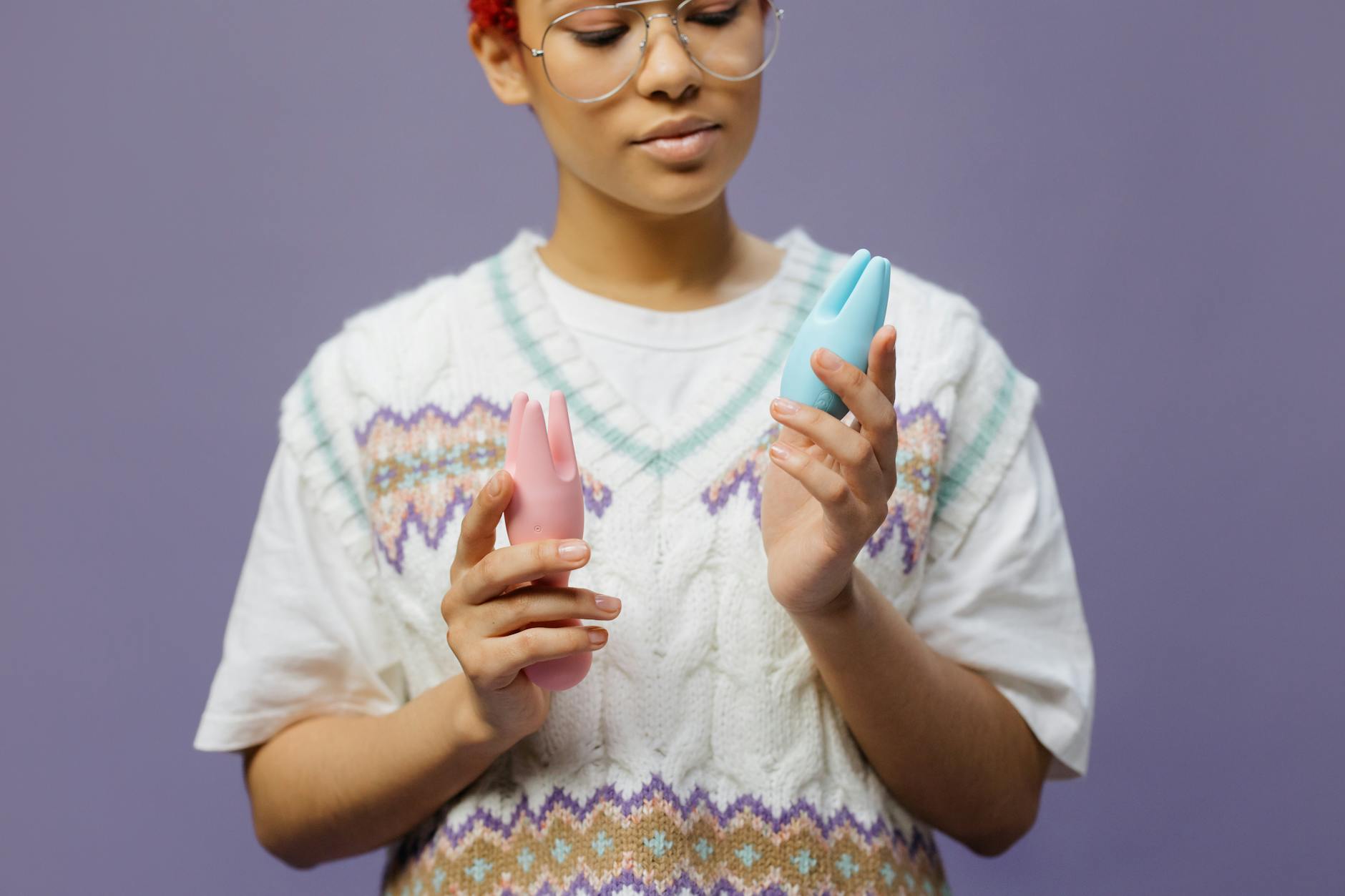
With a lemon vibrator like the Lem, you have a consistent, non-tiring source of stimulation. There's no hand fatigue. There's no rhythm drop-off. This removes the guilt variable entirely. Your partner isn't "working" anymore. There's no invisible scoreboard.
The clitoral suction design of most lemon vibrators also works differently than traditional vibration. Suction engages the entire clitoral structure, not just the surface. Many people find this creates a slower, deeper build toward orgasm. Slower means longer, which sounds counterintuitive, but it actually takes the pressure off because the sensation is so different from what your body expects that your brain stops running the "am I taking too long" subroutine.
The nervous system shift you need to make first
Before you even introduce a lemon vibrator, you need to rewire one thing: the idea that orgasm is the goal.
I know that sounds like wellness nonsense. It's not. When you reframe pleasure as "I want to feel good for the next 20 minutes" instead of "I want to come," your entire nervous system relaxes. Your parasympathetic nervous system (the rest-and-digest branch) activates instead of your sympathetic nervous system (fight-or-flight). When you're parasympathetic, arousal actually builds.
This is the permission you have to give yourself: an orgasm might not happen today, and that's not a failure. Pleasure happened. Your body felt good. You connected with your partner or yourself. That's the win.
Once you genuinely believe that, introducing a lemon vibrator stops being about "making sure I can come" and starts being about "I want to explore what this feels like." And that's when the magic happens.
How to use a lemon vibrator to rebuild trust in your own body
If you've been under orgasm pressure for a while, your body has learned to not feel. You might be numb. You might feel sensation but can't relax into it. Here's the sequence.
First week: explore solo, no goal. Use your lemon clitoral vibrator on the lowest setting for ten minutes. Don't try to come. Notice what feels good. Does the suction work better on the inner part of the clitoris or the shaft? Does the sensation build gradually or hit all at once? You're just gathering data. Your brain is learning that pleasure is safe and there's no timer.
Second week: extend that solo time to 15-20 minutes if you want to. Increase the setting if you're curious. Again, zero goal. If an orgasm happens, great. If it doesn't, you still got to feel good. Both are wins.
Third week: when you're ready, invite your partner in. But set an explicit boundary first. Tell them: "I'm using this to learn what my body likes. I'm not trying to come. I'm just exploring." This removes the pressure for them too. They're not "responsible" for your orgasm anymore. You're both just present.
What happens next is usually that people start coming more easily, not because they're trying harder, but because their nervous system finally relaxed.
When a partner is watching (and you feel self-conscious)
Let's address the elephant. A lot of people feel awkward using a lemon vibrator while their partner is there. You're worried they're judging. You're worried you look weird. You're worried it's taking too long. That's the performance anxiety showing up in a new disguise.
Here's the reframe: you're not performing. You're teaching them what your body likes. That's generous. That's intimate. That's actually more vulnerable than just lying there and hoping they guess.
Start with the light off or dimmed. Position yourself so you're not staring directly at each other. Some couples find it easier if the partner is touching them somewhere else (neck, breasts, legs) while the person with the vibrator is doing their thing. It makes it feel collaborative rather than like a solo performance.
Or try it like this: use the lemon vibrator on yourself during partnered sex, so it's integrated into what you're already doing together. It's not separate. It's part of the package.
Many people are shocked by how much more connected they feel when they actually advocate for their own pleasure instead of waiting for their partner to guess. Your partner probably desperately wants to know what you like. Using a lemon vibrator is you showing them.
The orgasm afterward (or not) actually matters less than you think
Here's something I see constantly in my practice. Once people genuinely stop prioritizing whether they come and start prioritizing whether they feel good, they often come faster and more intensely. It sounds paradoxical, but it's not. When the stakes feel lower, your body stops bracing. When your body stops bracing, sensation deepens. Orgasm is the natural end point, not the goal you're sprinting toward.
But even if that doesn't happen for you. Even if you use a lemon vibrator and the orgasm doesn't materialize the way you hoped. You still got to feel pleasure without guilt. That's a win. That's pressure-free. That's what matters.
FAQ: Orgasm pressure and lemon vibrators
Why do I feel like I'm taking forever when I use a vibrator?
Because vibrators often create a different sensation than manual stimulation, and different can feel "slower" even when it's actually not. Suction-based lemon vibrators especially can feel like a gradual build rather than a rapid climb. Your brain isn't used to that rhythm, so it interprets it as "this is taking longer than normal." It usually isn't. It's just different. Use a timer if it helps. Set one for 15 minutes. Often you'll be shocked how fast time actually moves when you're not watching the clock.
What if my partner thinks the vibrator means they're not enough?
This is about them, not you. And it's worth a conversation. A lemon vibrator isn't a replacement. It's a tool. Lots of people think adding a vibrator means the partner has failed somehow. That's insecurity talking, not reality. A straightforward conversation helps: "I want this because I want to feel more pleasure, not because you're doing anything wrong. I want you here with me." If they still resist after that honest conversation, that's a different problem that a vibrator can't fix.
Can I use a lemon clitoral vibrator if I have a hard time coming normally?
Yes. Actually, a lemon vibrator is often easier to orgasm with because the sensation is consistent and non-tiring. The pressure variable disappears. Many people who struggle with orgasm under normal circumstances find them easier with a suction-based toy like the Lem because the sensation is so different from what they're used to. Start on the lowest setting and give yourself permission to just explore.
Does using a vibrator mean I'll never be able to come without one?
No. This is a myth. Your body's capacity for pleasure doesn't diminish because you've experienced a vibrator. It's like saying your mouth won't enjoy food after you've had great food. It actually goes the other way. Once your nervous system learns what pleasure feels like without the pressure component, you often find that regular sex feels better too because you're less in your head.
What if I feel numb when I use it?
Numbness usually means your nervous system is still in protection mode. You've been under pressure for a long time and your body learned to shut down sensation as a defense. A lemon vibrator won't force sensation to come back immediately, but consistent, pressure-free exploration usually does rewaken it. Give it a few weeks of solo exploration. Don't rush it. Your body will come back online when it feels safe again.
How do I know if orgasm pressure is actually the problem and not something else?
Check in with these questions. Do you feel pleasure building, then lose it when you think about "am I taking too long?" Do you come more easily alone than with a partner? Do you feel like you're watching yourself instead of being in your body? Do you tense up when someone asks "are you close?" If you answered yes to any of these, orgasm pressure is the culprit. A lemon vibrator, combined with removing the performance aspect, usually fixes it. If numbness or difficulty with arousal persists beyond that, talk to a sex therapist or doctor. Sometimes there are other variables at play.
The bottom line
Orgasm pressure is one of the easiest things to accidentally create and one of the hardest to undo, but it is undoable. A lemon clitoral vibrator removes the mechanics that fuel pressure (the fatigue timer, the rhythm drop-off, the performance anxiety). When you pair that tool with a genuine mindset shift away from orgasm-as-goal and toward pleasure-as-goal, something shifts. Your body relaxes. Your nervous system settles. And often, the orgasms come anyway, faster and better than before.
The real work isn't the vibrator. It's the permission. Permission to not come. Permission to take as long as you need. Permission to advocate for your own pleasure. A lemon vibrator just makes that permission tangible.