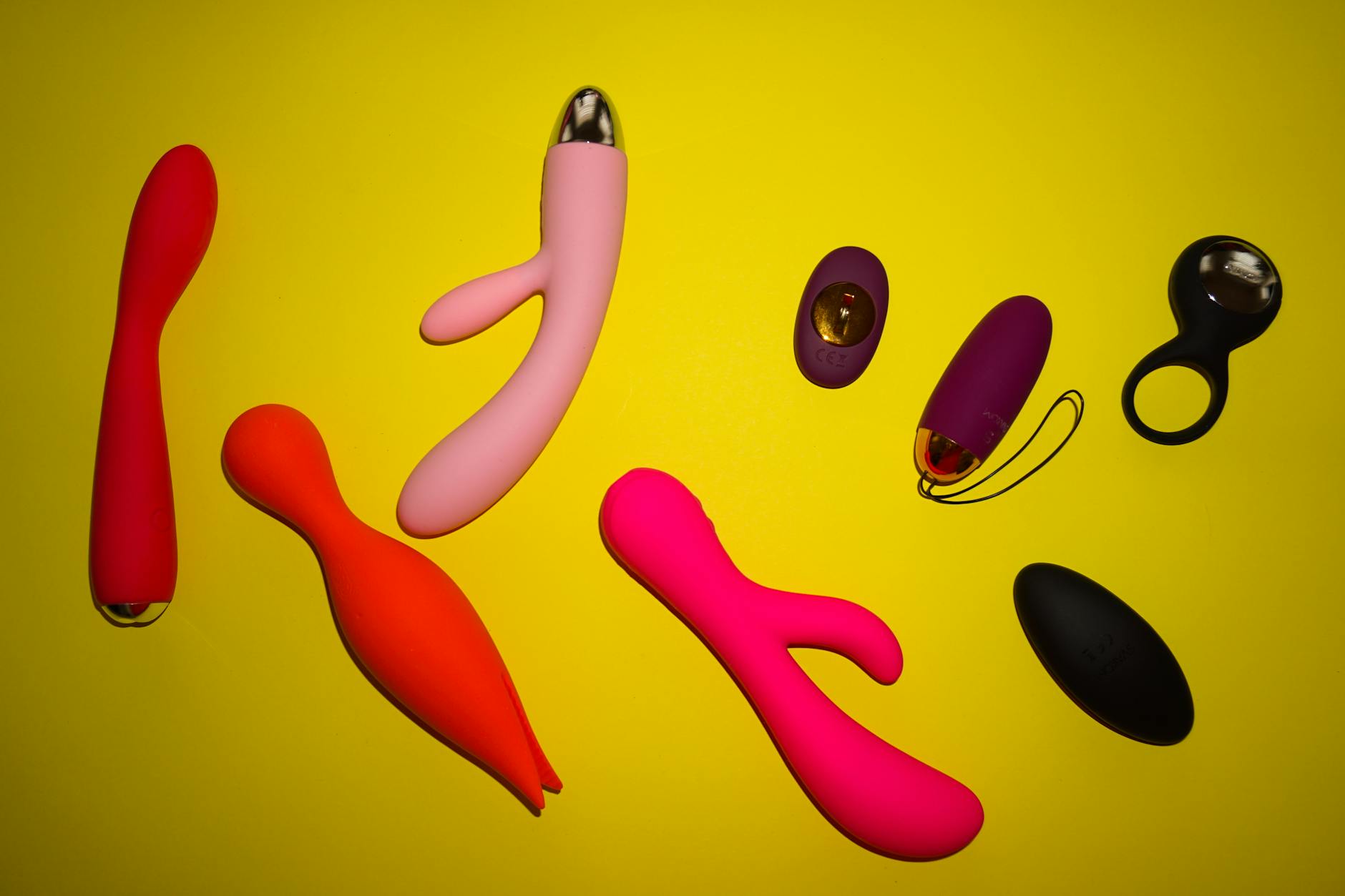
Okay, let's be honest: buying your first vibrator feels like a thing
You're scrolling, you're seeing options, and suddenly you're wondering if you're supposed to know the difference between a lemon sucker and a traditional vibrator, or whether intensity matters, or if that price tag is actually justified. Most first-time buyers end up either picking the cheapest option or the one with the fanciest marketing. Neither strategy tends to end well.
Here's the thing: choosing a lemon vibrator (or any clitoral vibrator) isn't complicated once you understand what you're actually shopping for. It's not about finding the "best" toy. It's about finding the one that matches your body, your preferences, and what you want from the experience. That's it.
Why clitoral vibrators matter more than you think
Your clitoris has about 8,000 nerve endings concentrated in a space the size of a pea. That density means it responds to stimulation differently than other parts of your body. A lemon vibrator works because it's designed specifically for that anatomy. It's not a multipurpose toy trying to do everything. It's focused.
The lemon clitoral vibrator style, including Hello Nancy's Lem, uses air-pulse technology or gentle suction rather than traditional vibration. That distinction matters. Instead of buzzing directly on tissue, it creates a pulsing sensation that stimulates the whole clitoral structure, including the internal arms. For many people, especially those new to vibrators, this feels less intense and more intuitive than a standard vibrator.
That said, some people prefer traditional vibration. Both are completely valid. The question is: which feels right for you?
The sensitivity question: how to know what your body actually needs
This is the one thing most first-time buyers get wrong. They assume sensitivity is about how easily they orgasm. It's not. Sensitivity is about how much direct stimulation your clitoral tissue can handle before it feels uncomfortable, numb, or overstimulated.
Here's a simple way to figure out where you land:
You're more sensitive if: Direct touch from a finger or partner sometimes feels too intense, sharp, or almost painful. You prefer gentler, broader strokes. You might notice that after a few minutes of intense stimulation, sensation fades even though you were into it moments before.
You're less sensitive if: You need consistent, focused pressure to feel much of anything. Lighter touch barely registers. You can handle (and often prefer) strong, direct stimulation without numbness kicking in.
You're somewhere in the middle if: You enjoy varying intensity. Sometimes you want gentleness, sometimes you want power. Context matters.
Why does this matter for choosing a lemon vibrator? Because lemon suckers and air-pulse toys are specifically designed for sensitive tissue. They distribute stimulation across a wider area instead of concentrating it on a single point. If you're highly sensitive, a gentle lemon clitoral vibrator is often the better entry point than a traditional vibrator.
If you're less sensitive or you know you prefer direct pressure, you might want to explore other styles or choose a lemon vibrator on a higher intensity setting.
Motor strength and what "intensity" actually means
Don't confuse motor strength with sensation. A toy with a stronger motor isn't automatically better. It's just different.
Lemon vibrators typically offer 3-10 intensity levels or patterns. The lowest settings are often more subtle and sustainable. The highest can feel overwhelming. Most people find their sweet spot somewhere in the middle, but that varies wildly from body to body and even day to day.
If you're new to vibrators, start with a toy that offers variable intensity. You want the flexibility to turn it down if something feels too strong, or turn it up if you want more. A toy with only one fixed speed is limiting and often frustrating.
Here's a practical question: do you prefer a consistent buzzing sensation, or do you like patterns and rhythms? Some lemon vibrators offer pre-programmed pulse patterns (think gentle throb, rapid flutter, wave). If you find rhythm matters to you, prioritize a toy with pattern options.
Battery life and power source matter more than you'd think
Look, if your vibrator dies mid-session, that's annoying. If it needs to charge for three hours between uses, that's inconvenient.
Most modern lemon vibrators are rechargeable (usually via USB), which is great for sustainability and long-term cost. Battery life typically ranges from 1-3 hours of continuous use. That's plenty for most people. Some offer app control or remote features, which is fun if you have a partner, but it's not essential.
One thing to check: is the toy waterproof? If you're thinking about using it in the shower or bath, that becomes important. Most quality lemon clitoral vibrators are at least water-resistant or fully waterproof, but confirm before buying.
Size and ergonomics: how it actually feels in your hand
Lemon vibrators come in different shapes and sizes. Some are petite and discreet. Others are broader and easier to grip. Neither is objectively better. It depends on what feels good in your hand and against your body.
Think about what matters to you:
Small and compact: Great if you want discretion, travel easily, or have smaller hands. Can sometimes feel harder to position exactly where you want it.
Medium with a handle: The Lem from Hello Nancy is designed here. It's approachable for first-timers, offers good grip, and is intuitive to maneuver.
Larger with more surface area: Provides broader stimulation, easier grip, but less portable.
Pick something that feels good to hold. You'll use it more if it doesn't feel awkward in your hand. And yes, holding it should feel intuitive, not fiddly.
Material, safety, and why silicone isn't just about comfort
The material of your vibrator matters for two reasons: safety and sensation.
Most quality lemon vibrators are made from medical-grade silicone. It's non-porous (meaning bacteria can't hide in microscopic cracks), hypoallergenic, easy to clean, and feels smooth against skin. Cheaper toys sometimes use porous materials that can harbor bacteria and cause irritation. You're not being fancy by choosing silicone. You're protecting your health.
Also check: is the motor isolated from the material, or does the vibration transfer directly into your tissue? Better toys have motors that are dampened or isolated to reduce potential nerve irritation over time.
Cleaning matters too. Look for a toy that's easy to rinse under warm water or wipe with a toy cleaner. If it's complicated to maintain, you're less likely to actually do it.
Price and the myth of "you get what you pay for"
Yes, you get what you pay for. But that doesn't mean expensive always equals better.
A quality lemon clitoral vibrator from a reputable brand (like Hello Nancy's Lem at $89) typically includes: reliable motor, safe materials, good battery life, and customer support if something goes wrong. That's not expensive. That's reasonable.
Cheaper toys ($20-30) sometimes work fine, but quality control is inconsistent, materials are sketchier, and motors tend to fail faster. The false economy of saving $30 upfront and buying three vibrators over five years is usually worse than investing once.
The absolute most expensive toys aren't always better either. Sometimes you're paying for luxury branding or features you don't want.
The sweet spot for a first vibrator? Somewhere between $60-100. That gets you quality, reliability, and the confidence that you're using something safe.
The solo versus partnered question
Does it matter if you're buying this for solo play or to use with a partner? Kind of.
For solo play, ergonomics and comfort matter most. You want something that feels intuitive in your hand and against your body.
For partnered play, think about whether you want something your partner can hold and control, or something you'll control yourself while they're involved in other ways. Some people want the toy to be a team effort. Others want to maintain that control themselves.
The good news: most lemon vibrators work beautifully both ways. The design is flexible enough to adapt to however you want to use it. If you're in a couple and one person is hesitant about toys, the low-key approach of a lemon clitoral vibrator is often less intimidating than larger or more complex designs.
What to actually look for on the product page
When you're comparing lemon vibrators, skip the marketing fluff. Look for these specifics:
Motor type and intensity levels. Is it air-pulse suction, traditional vibration, or both? How many settings? Can you control intensity?
Battery and charging. Rechargeable or battery-powered? How long does it last per charge? Can you charge it with a standard USB cable?
Material and waterproofing. Medical-grade silicone? Waterproof or water-resistant? Easy to clean?
Warranty and return policy. Does the brand stand behind the product? What happens if it breaks in month two?
User reviews from verified buyers. Not the five-star generic ones. Look for specific feedback: "quieter than expected," "took me a few tries to find the right setting," "great after having sensitivity issues." Those tell you real information.
Making the actual decision
Here's the secret no one talks about: your first vibrator doesn't have to be perfect. It has to be good enough to explore what you like. Once you know what works for your body, you can refine from there.
If you're drawn to lemon vibrators specifically, that's often instinct. The air-pulse approach, the design, the brand story. Trust that. You're not overthinking it. You're making an informed choice.
Pick something from a reputable brand. Check the reviews. Make sure it matches your sensitivity level and has adjustable intensity. Confirm it's made from safe materials. That covers 95% of what actually matters.
Then stop researching and start using it. Your body will tell you what you need to know next.
People also ask
What's the difference between a lemon vibrator and a regular vibrator?
Lemon vibrators typically use air-pulse or suction technology instead of traditional vibration. Instead of buzzing directly on tissue, they create a pulsing sensation that stimulates a broader area. This often feels less intense and more diffuse than standard vibration. For many first-time buyers, especially those with sensitive clitoral tissue, this approach feels more intuitive. Traditional vibrators concentrate stimulation on a single point, which some people prefer and others find overwhelming.
Is a lemon clitoral vibrator better for sensitive tissue?
Often, yes. The air-pulse design of lemon vibrators distributes stimulation across a wider area rather than concentrating it on one spot. This makes them particularly good for people whose clitoral tissue feels tender, becomes numb easily, or is overwhelmed by direct pressure. That said, sensitivity is individual. Some people with sensitive tissue prefer traditional vibration on a lower setting. The best approach is to start with variable intensity and adjust based on what your body tells you.
How do I know what intensity level to start with?
Always start at the lowest setting. Explore for a few minutes. Most people naturally build toward higher intensity over time as their body acclimates and arousal builds. If lowest feels too weak, you can increase. If it feels too intense, you haven't overwhelmed your nervous system yet. There's no shame in using a lower setting consistently. Some people's bodies just respond better to gentler stimulation, and that's completely normal.
Can I use a lemon vibrator if I've never had an orgasm?
Yes. Many people who haven't experienced orgasm find that a clitoral vibrator, especially one designed for gentle stimulation like a lemon vibrator, helps them discover their response. The consistency and focused stimulation can make it easier to identify what feels good. That said, a vibrator is a tool, not a guarantee. Pleasure and orgasm are about your whole nervous system, not just the toy. If you're working through past trauma or anxiety, that context matters too. Consider exploring that alongside using a vibrator, not instead of.
What if my partner is nervous about me using a vibrator?
That's common, and it's worth addressing directly. Many partners worry the toy will replace them or that it means something is wrong with the relationship. Neither is usually true. A vibrator is a tool for your pleasure, similar to how exercise or a hot bath feels good. It doesn't diminish partnership. In fact, many couples find that when one partner has more pleasure available to them, the whole relationship improves. If your partner is hesitant, invite them to learn alongside you. Some people feel less threatened when they understand what's happening and why.
How often should I use a lemon vibrator?
As often as you want. There's no healthy limit to solo pleasure. Some people use a vibrator several times a week. Some use it daily. Some use it occasionally. All of that is normal. The only thing to monitor is whether you're developing numbness over time, which would suggest taking a break for a few days to reset sensitivity. Most people don't experience this with variable-intensity toys, especially if they're not using the highest setting consistently.
Final thought
Choosing your first lemon vibrator doesn't require a degree in sexual health (though having one helps). Start with your body's actual needs: how sensitive is your tissue, what kind of stimulation appeals to you, and what matters logistically (battery life, discretion, durability). Match those to a toy from a reputable brand with good reviews. Then trust your instinct.
Your pleasure is worth the thought and investment. You deserve a tool that actually works for you, not against you. That's not indulgent. That's just sense.
Have questions about specific toys or want personalized guidance? Reach out to us. We're here to help you find what actually works for your body.